How a ‘Dubai chewy cookie’ craze led to shortages of key ingredients in Korea
Locally known as ‘dujjonku’, the dessert is a Korean version of the Dubai chocolate trend that swept cafes last year and experts chalk up the rush to the fear of missing out, Shahana Yasmin writes
South Korea is seeing a shortage of pistachios, marshmallows, and shredded pastry as demand for a viral Dubai-style dessert takes the country by storm, turning a social media craze into a supply-chain problem.
Locally known as “dujjonku”, the ‘Dubai chewy cookie’ is a Korean version of the Dubai chocolate trend that swept cafes last year.
The cookie is made of kataifi (a threadlike Middle Eastern pastry) which is fried until crisp, mixed into pistachio cream, shaped into a ball, and wrapped in a glossy marshmallow-and-cocoa coating that cools into a chewy, rice-cake-like shell.
The cookie’s creator, pastry chef Kim Na Ra, told the documentary series Little Big Masters that she originally made marshmallow-coated chewy cookies before a customer suggested adding Dubai chocolate-style filling, a request that led to the birth of dujjonku.
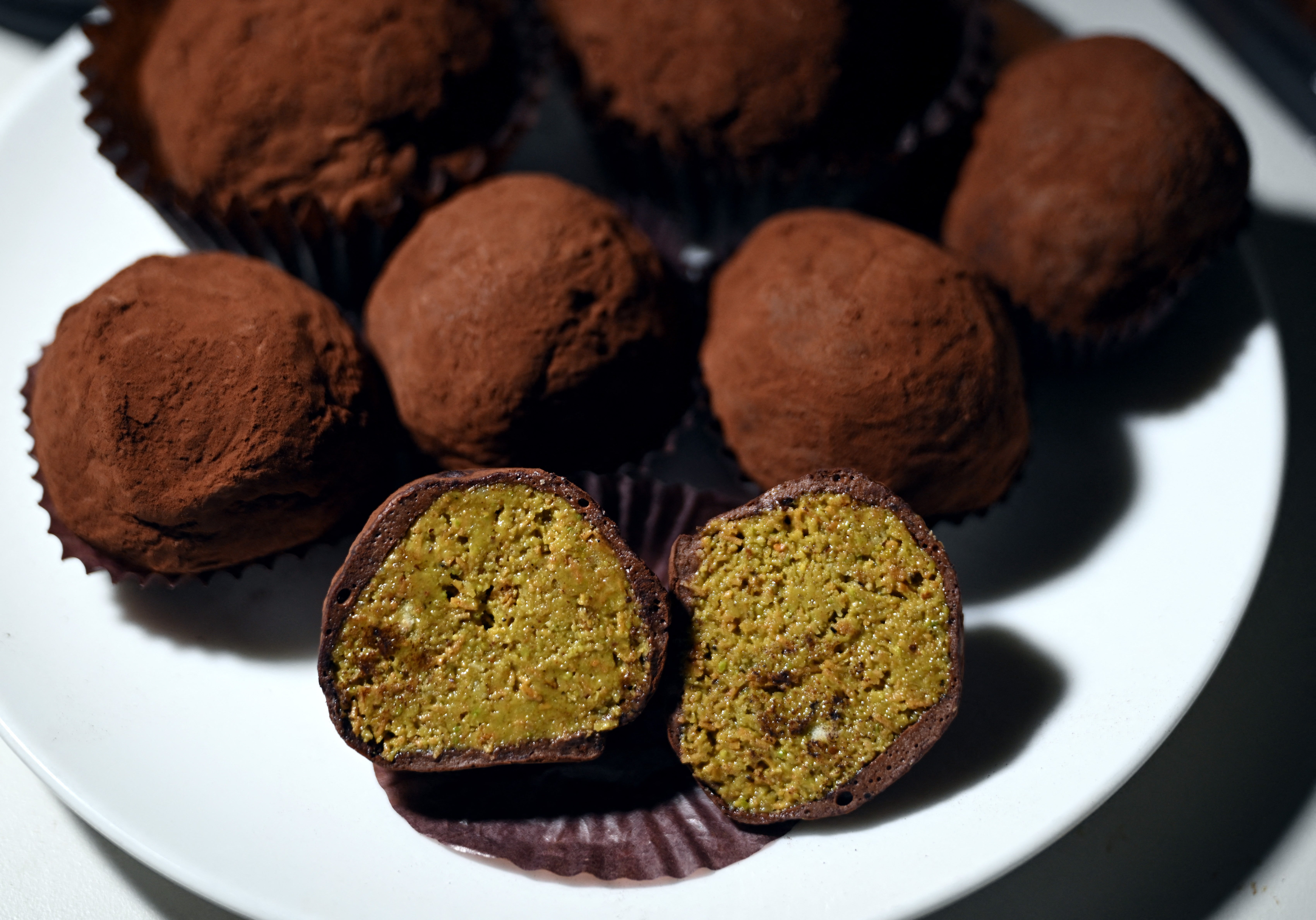
Kim now produces more than 30,000 cookies a day with about 50 employees, with daily sales of roughly 130 million won (£65,044), according to Korea JoongAng Daily.
“Many bakeries have already created their own versions in their own styles. I think the reason it became so widely loved is that we created the trend together,” she said.
The cookie’s journey from niche bakeries to viral obsession can be traced back to September last year, after Jang Won Young of K-pop group IVE posted photos of it on her social media. Since then, Instagram has seen more than 30,000 photos tagged with the dujjonku, and neighbourhoods known for dessert cafés have seen customers line up before opening hours to secure a limited daily batch.
Supermarket chain Emart says sales of marshmallows jumped 289.2 per cent and pistachio sales rose 174.9 per cent between early December and late January, while cocoa powder sales climbed 125.7 per cent over the same period, according to a report in Korea JoongAng Daily.
Marshmallow sales for online retailer Gmarket were about 20 times higher than the previous month, with kataifi sales quadrupling and pistachio sales rising 1.6 times. Compared with a year earlier, Gmarket’s marshmallow sales were 115 times higher, while kataifi and pistachio sales increased 17-fold and 10-fold respectively.
Prices for the ingredients have followed the demand.
Fallcent, a price tracking app that monitors listings on e-commerce giant Coupang, found that the price of pistachios had more than tripled recently. A one-kilogram bag of unshelled pistachios that cost about 20,000 won (£10) in early December had climbed to around 80,000 won (£40) by late January, while 500 grams of kataifi nearly doubled to about 30,000 won (£15), reported The Korea Herald.
As the rush has continued to warm normal supply chains, some suppliers have reportedly begun to cancel pre-arranged transactions in order to resell stock elsewhere at higher prices, while other buyers snapped up ingredients only to re-list them on second-hand platforms at a mark-up.
In one case, buyers reportedly paid premiums of more than 100,000 won (£50) to secure a kilogram of pistachios at short notice, compared with Emart’s shelf price of about 32,450 won (£16.2) per kilogram, according to reports.

The scale of the cookie’s popularity has reached a fever pitch. According to Korea Times, a bakery distributed all 75 of its waiting tickets within minutes, with customers ranging from teenagers to retirees who had all arrived at least an hour before its 9am opening time.
“I saw it on Reels,” Jung Ha Ru, 17 told the outlet, as she waited in freezing conditions. “I had to see what the hype was about.”
South Korea has seen its fair share of trendy food, from honey butter chips to tanghulu, but the fervour for Dubai chewy cookies doesn’t seem to be dying down. Bakeries seemed to be going out of stock quick enough that a programmer ended up building a real-time stock map showing which cafés still had any left.
He explained that he had created it after struggling to buy dujjonku for his girlfriend. “Checking stock by calling stores or visiting their Instagram pages was cumbersome,” he told The Chosun Daily. “I thought a map showing stock at a glance would be convenient, so I developed it myself.”
In an effort to ease winter blood shortages, the Korean Red Cross began offering Dubai chewy cookies as incentives for donors. Several blood donation centres saw numbers surge as a result, with some reporting that donations doubled or even tripled.
As bakeries struggled to keep up with demand, places with no background in sweets have begun to add the dessert to their menus in hopes of drawing more customers. A sushi restaurant owner told The Korea Times that Dubai chewy cookies, rather than premium fish, had become his best-selling item, lifting revenue by 30 per cent.
Food delivery platforms have also seen a sharp rise in searches for “Dubai chewy cookie”, with Baedal Minjok recording a more than 300 per cent increase in pickup orders within a month.
Individual cookies that were originally sold for between 4,000 (£2) and 10,000 (£5) won are now listed at up to 12,000 won (£6) on delivery apps.
Major brands have chosen to capitalise on the trend as well. Starbucks Korea launched a “Dubai chewy roll” at six locations in Seoul, selling just 40 per store per day and limiting purchases to two per customer. Long queues formed before 7am in temperatures approaching -10°C, prompting some branches to set up rear-entrance waiting areas and provide live stock updates, reported The Korea Herald.
Ediya Coffee, Gong Cha, Baskin-Robbins, Paris Baguette and convenience store chains CU and GS25 have all released their own interpretations, from tarts and mochi to chewy rice cakes.
CU alone has sold more than 1.8 million units of its Dubai-style chewy rice cake since October, and their Dubai Style Towel Cake sold out their first 40,000 pieces when first introduced in January, and has also sold out its next 21,000 via preorder.
As prices for the cookies and its ingredients rise and also become scarce, consumers have begun to get creative. A YouTube video showing how to replace kataifi with soybean noodles has drawn more than 4 million views, where the creator assures viewers they can achieve a similar texture to the original at just a fraction of the cost. Others have taken mass-market snacks like Choco Pie, and added pistachio cream and frozen them to mimic the texture.
Psychologist Kwak Geum Hee of Seoul National University chalks up the rush to fear of missing out. “Young people especially worry: ‘Everyone knows about this. How can I not?’” she told Korea Times. “It becomes about belonging.”
However, Inha University’s consumer studies professor Lee Eun Hee doesn’t believe it’s a bad thing. “Koreans have an exceptionally strong bandwagon effect. When people gather somewhere, we instinctively join. There’s competitive energy, a desire to participate. It’s not necessarily negative – it creates economic dynamism.”
Join our commenting forum
Join thought-provoking conversations, follow other Independent readers and see their replies
Comments
Bookmark popover
Removed from bookmarks