Ancient treasures spark new pursuit of beauty
THE ARTICLES ON THESE PAGES ARE PRODUCED BY CHINA DAILY, WHICH TAKES SOLE RESPONSIBILITY FOR THE CONTENTS

On 19 July, Luo Li, a schoolteacher from Chengdu, Sichuan province, was pulled from a long queue at the National Museum of China in Beijing while waiting to buy one of the museum’s most popular collectibles — an empress coronet magnet.
Surrounded by museum staff and media, Luo was told that the one she purchased was the two millionth coronet magnet sold since the product was first released exactly a year earlier. The magnets, available in both wood and metal versions, have become a sensation. She received the magnet from Li Yafei, a visitor from Shandong province who, in March, had purchased the one millionth magnet.
The unexpected craze has also drawn more visitors to see the original — a Ming Dynasty (1368–1644) gold coronet worn by Empress Xiaoduan, lavishly decorated with pearls and precious stones.
The coronet is part of the long-term exhibition, Ancient China, at the museum, where a special queuing area has been set up since the magnet went viral late last year.
While a quick glance may suffice for a photo, it hardly reveals the rich history behind the ornate headpiece.
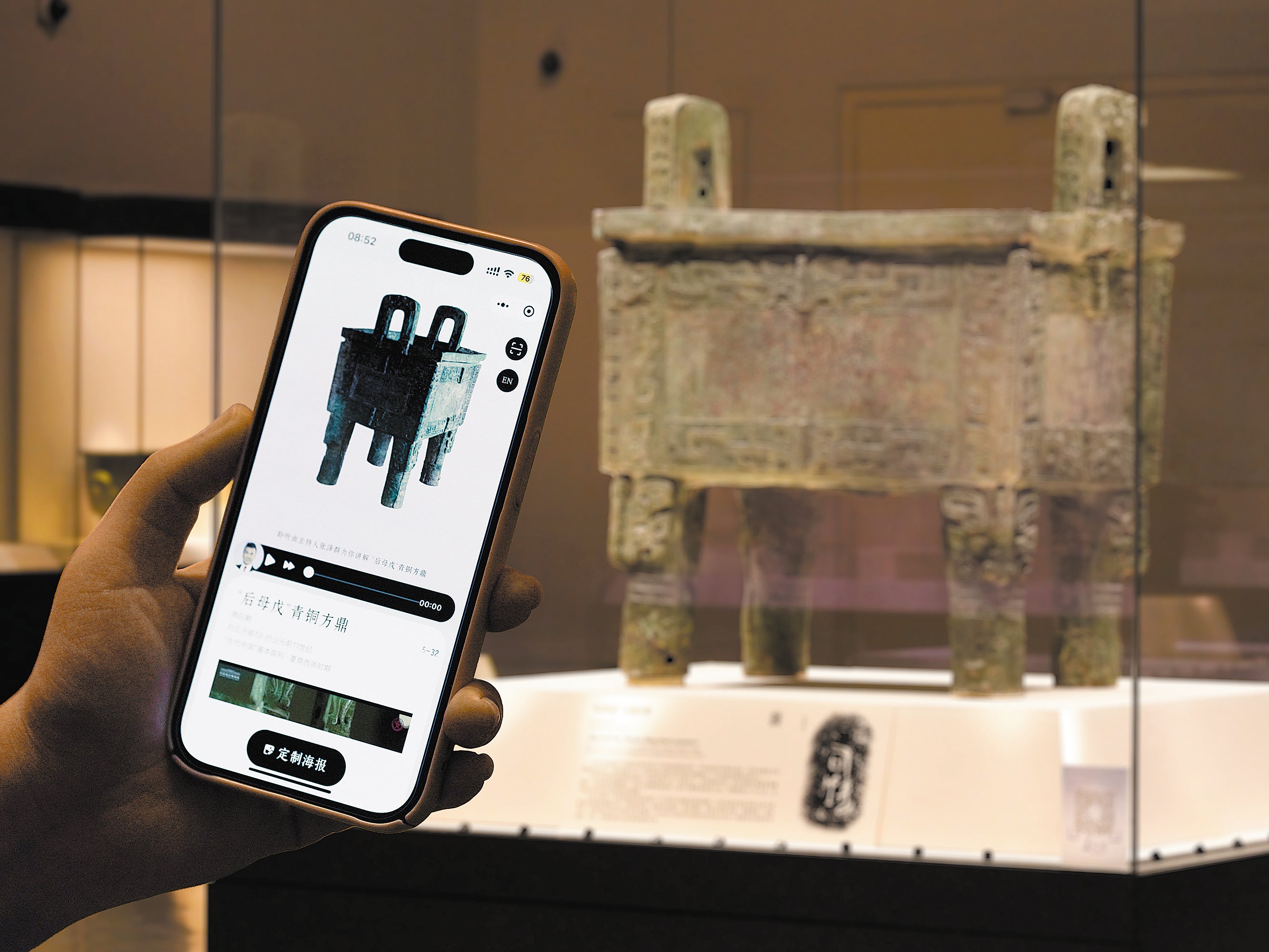
To give visitors a deeper experience, the National Museum recently launched a mini-programme called Essentiality of Beauty on the Chinese social media platform WeChat. Whether on-site or online, it allows users access to a selection of collected antiquities at the museum, featuring images and texts with audio narrations.
The programme would take people on a guided tour, combining virtual and real experiences, of 32 artefacts which are from different periods of time and on display at the museum’s current long-term shows, including the Ming empress coronet.
“These objects reflect people’s pursuit of beauty. They have been treasured and passed down through the centuries because they are outstanding examples of artistic excellence,” says Zhu Xiaoyun, curator and director of international relations at the museum.
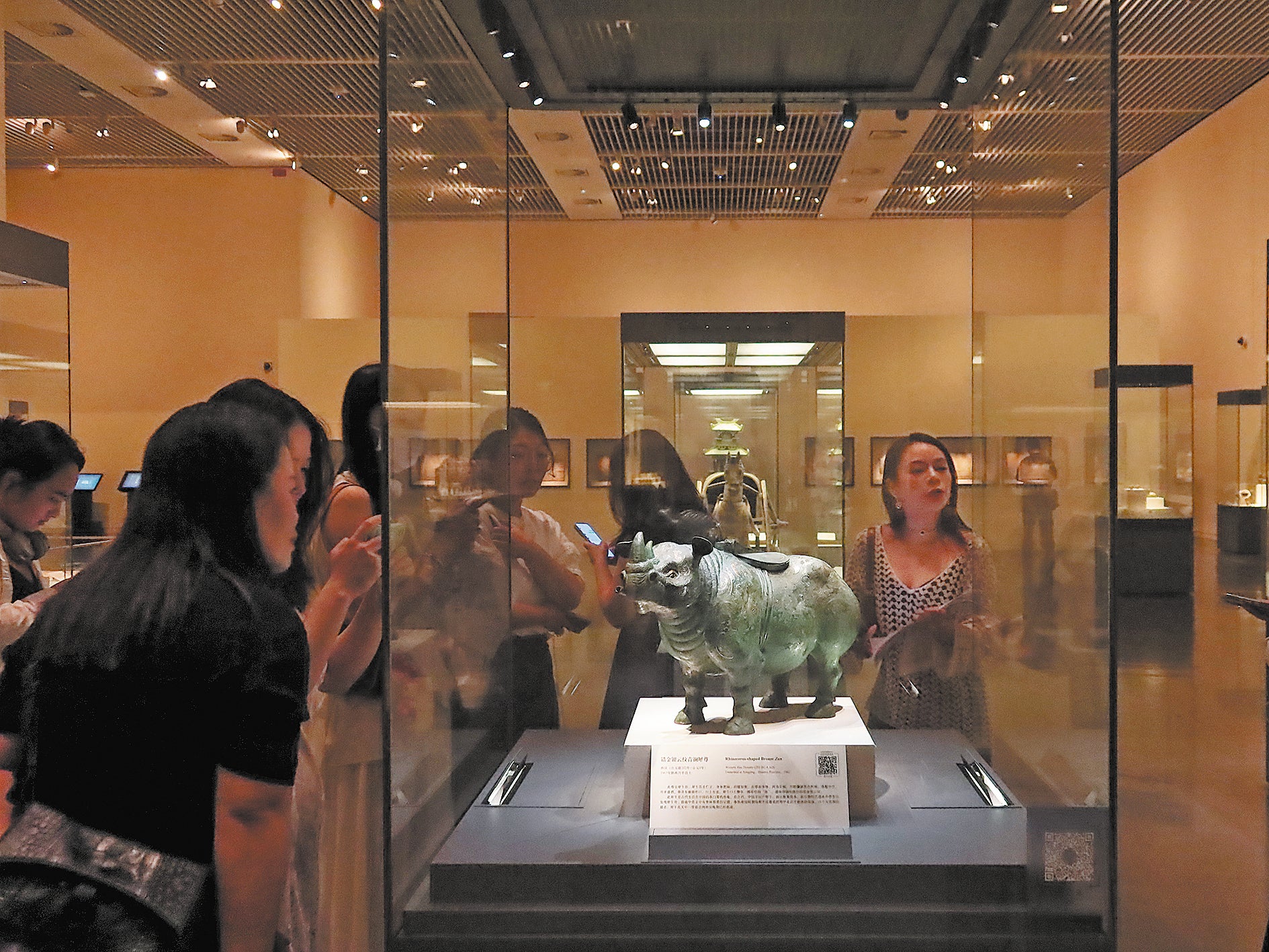
She says the tour takes people through different exhibition halls, introducing artefacts that showcase a range of craftsmanship and art forms, helping them understand the evolution of Chinese cultural and aesthetic traditions.
Some of the objects, she says, appreciate the beauty of nature, and underline the “dao fa zi ran” principle in classic Chinese philosophy, that is, learning from nature and following its principles. Others celebrate the pinnacle of ancient craftsmanship, such as a seventh-century gold necklace inlaid with pearls and red and blue gemstones.
The necklace has a poignant backstory. In 608, 9-year-old Li Jingxun, a young aristocrat and granddaughter of Yang Lihua, a daughter of Yang Jian, the founding emperor of the Sui Dynasty (581-618), was buried in an extraordinary ceremony. Archaeologists excavating her tomb more than 1,300 years later were astonished by the richness of the burial, which included the necklace now displayed in the exhibition Ancient China.
Other artefacts reflect the grandeur of social rituals, such as intricately patterned bronzes from the Shang Dynasty (c. 16th century–11th century BC), used in major ceremonies.
Still others convey romance and freedom, such as a Tang Dynasty (618–907) mural of a woman in a flowing red dress performing the “scarf dance”, in which the dancer wove long scarves through the air.
Curator Zhu says the artefacts featured in the mini-programme will be updated in line with changes in the museum’s exhibitions. She emphasises that the selection is not meant to represent all of Chinese aesthetics, but to serve as starting points for visitors to explore how ancient Chinese understood and created beauty — and how that legacy can be preserved today.
Bookmark popover
Removed from bookmarks