China becomes hub for two-way investment
THE ARTICLES ON THESE PAGES ARE PRODUCED BY CHINA DAILY, WHICH TAKES SOLE RESPONSIBILITY FOR THE CONTENTS


As global supply chains undergo transformation and investment patterns shift, China has taken on a dual role in the world economy — as both a magnet for foreign companies and an increasingly influential outbound investor, experts and executives say.
This signals continuity in the country’s opening-up, that China is no longer just a participant in global growth, and that it is becoming a co-architect of such growth, they said.
What draws foreign companies today is not the promise of low costs, but the chance to innovate, to test ideas in a vast and demanding market, and to use China as a springboard into global competition.
“China remains the top target market for companies expanding their global trade layout, with 44 per cent of global companies choosing China as their first choice for expansion,” said David Liao, co-chief executive for Asia and the Middle East at HSBC.
Citing survey data, he said that 40 per cent of global firms are either already increasing their manufacturing presence in China over the next two years or are planning to do so. “These findings highlight that China remains a hot spot for international investment and occupies a central position in the global trade landscape.”
That reality is reflected in the way executives describe the market, many calling it a touchstone for development.
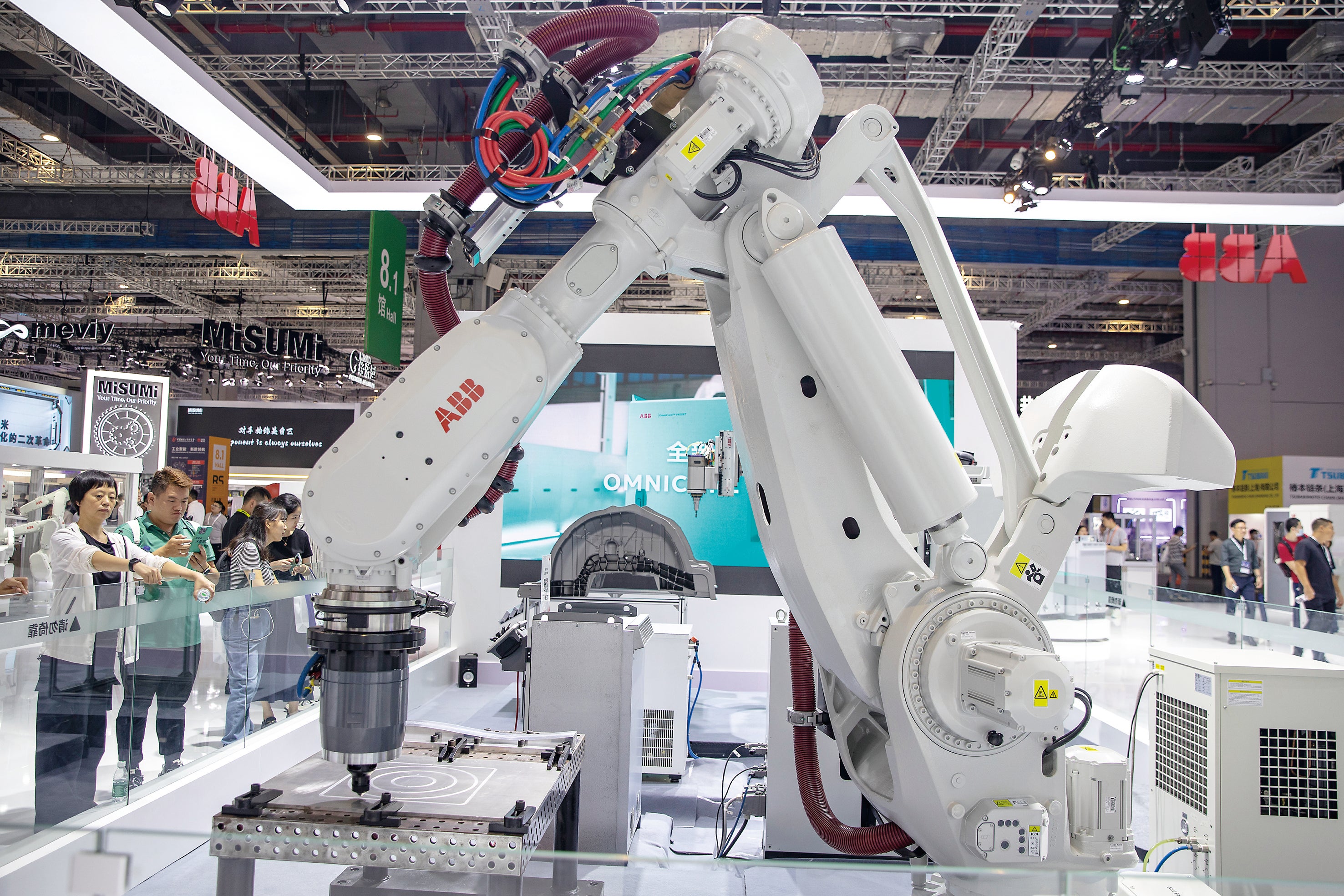
Morten Wierod, chief executive of the Swedish-Swiss industrial group ABB, said China is the cornerstone of the company’s business, with Xiamen, Fujian province, becoming its largest global manufacturing base and innovation centre.
The same pattern plays out in life sciences and healthcare. Anita Wei, vice-president of external affairs of the life sciences and technology company Danaher China, said her company’s “double innovation engine” strategy is built on deep localisation.
“We aim to achieve 80 per cent of sales revenue from localised production and 80 per cent of raw material sourcing from the Chinese market. This allows our research and development teams to respond directly to clinical needs in China and then promote those solutions globally.”
Other foreign companies have also adopted similar strategies.
Zhao Bingdi, president of Panasonic China, described the shift by saying China is not only a manufacturing centre for Panasonic, but also an innovation hub, and that the Japanese electronics firm is transitioning from “in China, for China” to “in China, for global” with the aim of using its competitive edge honed in China for Southeast Asia and beyond.
These strategies have been underpinned by policy.
China has steadily opened doors wider, reducing national and free trade zone negative lists for foreign investment to 29 and 27 items, respectively. Restrictions on manufacturing investment have been removed, and pilot programs in cloud computing, biotechnology and wholly foreign-owned hospitals are underway. Procurement, IP protection, data flows and tax incentives are all being fine-tuned to create a more predictable business climate.
If inbound investment illustrates how China strengthens multinationals, outbound investment shows how Chinese firms are reshaping international markets. Last year outward direct investment was worth $192 billion (£143 billion), bringing cumulative stock above $3.14 trillion (£2.34 trillion). For the 13th year in a row, China ranked among the world’s top three investors, according to the 2024 statistical bulletin of outward foreign direct investment.
Bookmark popover
Removed from bookmarks