Michael Mosley, the inspiring, experimental TV doctor who changed the way we eat
The broadcaster had a unique and varied career, spanning a stint in the City, diet books and self-experiments on screen, writes Katie Rosseinsky

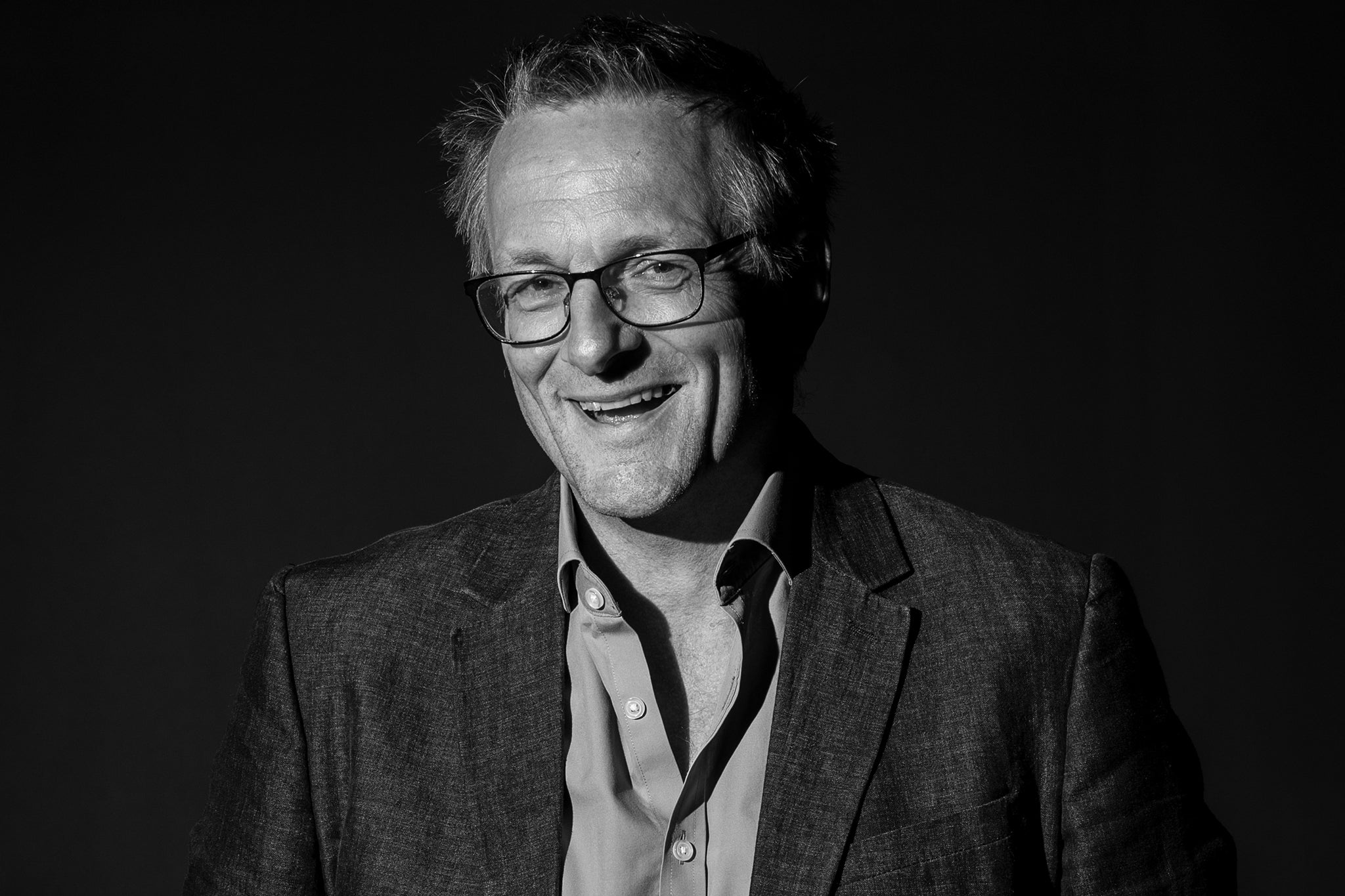
In 2013, Dr Michael Mosley changed the way a nation ate. That was the year the broadcaster, who died this week at the age of 67 after going missing on holiday in Greece, released his groundbreaking first book, The Fast Diet. It advocated the “5:2” method of drastically restricting your calorie consumption on two days out of every seven, and was an immediate sensation upon its release. Everyone from celebrity chefs to politicians to the colleague you bumped into in the kitchen seemed to be singing its praises.
As a bemused New York Times report put it, Britain had “develop[ed] a voracious appetite for a new diet”. But popularising the 5:2 – and the overall concept of intermittent fasting – was just one facet of Mosley’s unique broadcasting career, which saw him test out often strange-seeming techniques or take on unusual challenges in the name of learning more about how our bodies work, and how we might lead a healthier life. His self-experimentation, he once admitted to The Guardian, was inspired by his father’s death as a result of complications from diabetes. “No male in my family has made it beyond 72,” he said. “His friends said how much like him I was, so he was kind of a warning from history.”
Mosley’s career path was an unconventional one. After studying politics, philosophy and economics at the University of Oxford, he spent two years in the City as an investment banker, but found the work unsatisfying. “I decided then that my primary interest in life wasn’t making money for myself or other people,” he later told the British Medical Journal. “I was passionately interested in what makes people tick… and I actually went into medicine intending to become a psychiatrist.”
He started medical school soon afterwards, and met his wife Dr Clare Bailey on his first day. But his psychiatry placements felt underwhelming too. “I went into it with huge hopes and beliefs, and then it became more obvious that there were severe limitations to what you could do,” he said.
When he had qualified as a doctor, he saw a newspaper advert for the BBC’s trainee assistant producer scheme, and decided to apply on a whim. He was offered the job, and then had to choose between making another career change or continuing as a junior doctor. “I went on holiday to Greece, and I had two telegrams that I wrote in my hand,” he told the BMJ. He initially sent a message declining the BBC gig, but “felt a tremendous sense of loss. Then I sent another telegram saying, ‘I’ve changed my mind’”.
It was clearly the right decision. Mosley became a producer on science programmes including Tomorrow’s World, Horizon and QED, and received an Emmy nomination for his work on John Cleese’s documentary The Human Face, in which the comedian explored the science behind facial expression, recognition and beauty. He then started making appearances in front of the camera, too, first in the 2008 series Medical Mavericks, a show about self-experimenting doctors and scientists that he had “pitched… to every controller of every channel for 14 years”.
His own willingness to self-experiment on camera – and try out things that most presenters would surely shy away from – would come to characterise his broadcasting work. In his BBC documentary The Wonderful World of Blood, he added his own blood to a black pudding recipe and injected snake venom into his bloodstream to look at its clotting effects. For Infested: Living With Parasites, he even infected himself with a tapeworm to study its impact on his body (he ended up suffering no major ill-effects, but did put on a kilogram in weight).

His abundant zeal for science leapt out in these zany on-screen investigations, with his findings delivered in a way that felt accessible without patronising the audience. Somehow, he remained unfazed by, say, tracking down and then ingesting tapeworm eggs in Kenya. With characteristic understatement, he later described the experience as “absolutely fine” (braving underground caves in a programme about fear, though, did leave him “really freaked”).
In more recent years, his experiments were more tame – for example trying out Nordic walking or Tai Chi for his BBC wellbeing podcast Just One Thing – but he still retained that infectious sense of curiosity and his easy-going interviewing style.
It was the release of his 2012 Horizon documentary Eat, Fast and Live Longer that really caught the public’s attention, though. Mosley had been diagnosed with type 2 diabetes, but wasn’t keen on the idea of immediately taking medication. “My father had developed it at the same age,” he later told BBC Radio 4’s Saturday Live. “And he’d died 20 years later of complications of diabetes… I sort of knew where this journey ended or was likely to end.” So he persuaded the BBC to let him make a programme in which he would essentially try to reverse his condition.

Mosley ended up exploring research from the scientists Mark Mattson and Michelle Harvie, who had investigated how cutting food intake significantly might impact weight loss and longevity. After looking into the potential benefits of restricting calories for two days each week, Mosley tested out a 5:2 diet, in which he would eat normally five days each week, then consume only 800 calories on two “fast” days. His results were striking: he managed to lose around 9 kilos and appeared to have reversed his type 2 diabetes.
The Fast Diet, co-written with the journalist Mimi Spencer, ended up selling 350,000 copies in the UK in the year it was published; it has since sold more than 1 million copies and has been translated into 30 languages.
Mosley also became a regular contributor on shows such as This Morning and The One Show, sharing his insights on health and wellbeing stories. Speaking shortly after his disappearance, This Morning guest host Vanessa Feltz seemed to encapsulate his appeal as a presenter. “He is a man of irrepressible energy and enthusiasm,” she said. “His enthusiasm is for everyone else to feel the same – to be your fittest and enjoy life to your fullest.”
Join our commenting forum
Join thought-provoking conversations, follow other Independent readers and see their replies
Comments
Bookmark popover
Removed from bookmarks