Akram Khan’s Giselle review – A work of monumental power and presence
The dancers in this ballet move with surging force, pain and anger rippling through their bodies
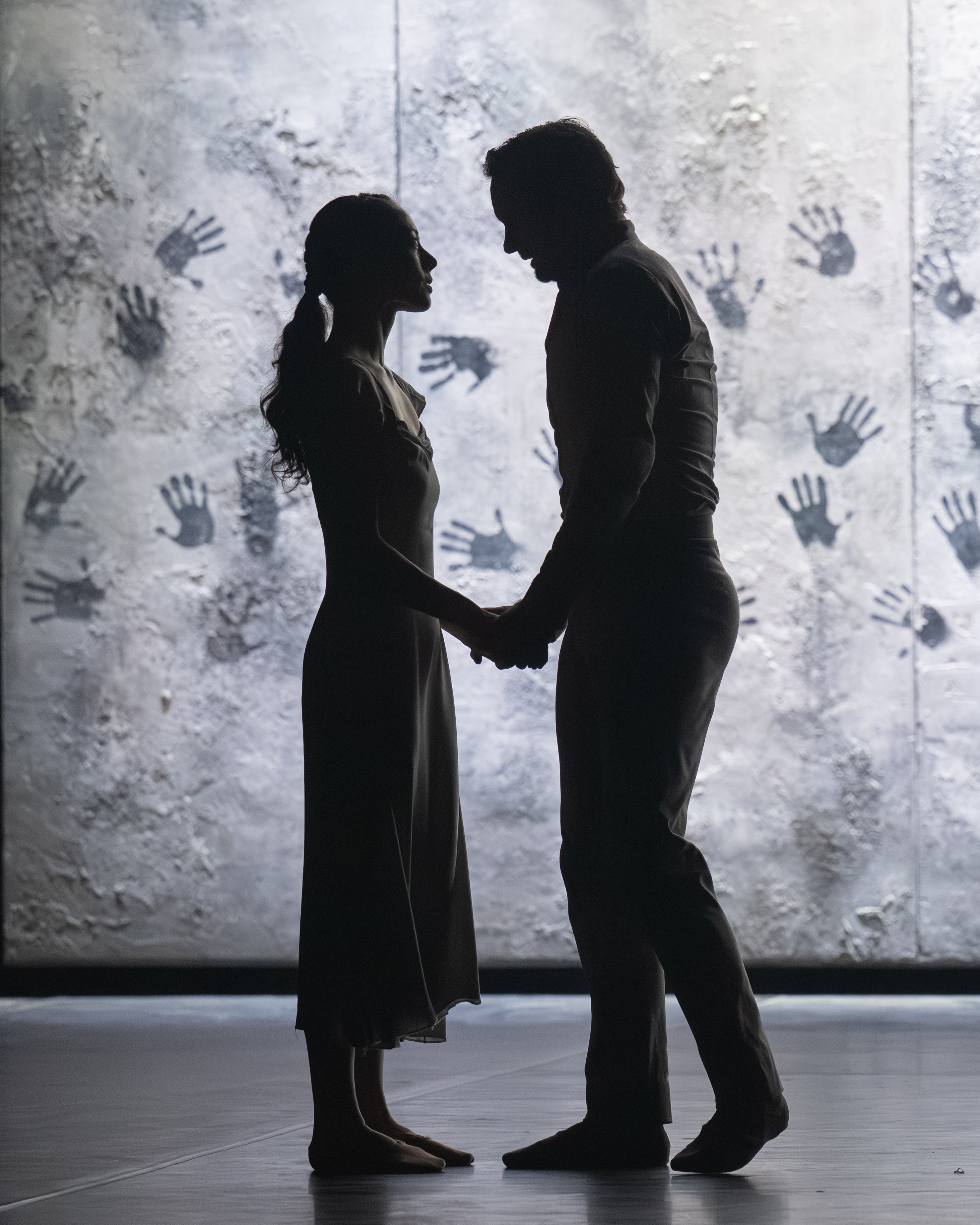
Back for its 10th anniversary, Akram Khan’s Giselle is still mighty. Reimagining the Romantic classic for English National Ballet in 2016, Khan found a new ferocity in the story of a poor girl and her wealthy lover. He makes it a stark, elemental tale, told in movement of devastating force.
Khan and his dramaturge Ruth Little reset the story as a conflict between gilded Landlords and an excluded underclass – the Outcasts. Where the 19th-century ballet starts in a village of cosy cottages and harvest celebrations, designer Tim Yip starts with a bleak, massive wall, spattered with handprints. Giselle is one of many on the outside. Her lover Albrecht is still a rich boy at play, caught out when his powerful fiancée makes a visit outside the wall.
The emphasis is on the division and oppression of this society. But Khan’s villagers, the Outcasts, are never passive victims. From the first time we see them, pushing against the wall, they move with surging power, pain and anger rippling through their bodies.
-and-Company--Photo-by-Johan.jpg?quality=75&width=230&crop=3%3A2%2Csmart&auto=webp)
.jpg?quality=75&width=230&crop=3%3A2%2Csmart&auto=webp)

Vincenzo Lamagana’s brilliant reinvention of the score includes snatches of Adophe Adam’s original. With sound design by Yvonne Gilbert, he layers washes of sound: biting woodwind and percussion, with Maria Seletskaja conducting the English National Ballet Philharmonic. The Landlords are heralded by a blaring horn call, something between the hunting horn of the original and the blast of the factory whistle. Their arrival is a coup de theatre, the huge wall turning right over to let in the rich party, glittering in their outlandish costumes.
Emily Suzuki’s Giselle has a brave clarity, finding touches of tenderness with James Streeter’s determined Albrecht. In her mad scene, there’s a broken poise to her grief. The other Outcasts circle around her, woven tight as a basket, then pull back to reveal her crumpled on the floor. Reunited, Suzuki and Streeter wrap around each other, their moves full of counterbalance – literally reaching the point where they’re equally weighted.
Emma Hawes is an imperious Queen of the Wilis, reimagined as haunted figures carrying long staffs. Again, Khan digs into the power dynamics as the Queen commands Giselle, who will eventually defy her for love. In a brilliantly unsettling image, she places a staff in Giselle’s mouth: it’s both a weapon and a bridle. As Hilarion, Ken Saruhashi has a mocking edge as he urges his fellow Outcasts to dance for the Landlords’ entertainment. Even as they curry favour, there’s a threat of rebellion in their stomping dance.
In the 10 years since its premiere, Khan’s Giselle has become an international calling card for English National Ballet. It’s changed Khan’s career, too, eventually prompting him to wind up his own company in order to collaborate more flexibly. On stage, it’s a work of monumental power and presence.
Join our commenting forum
Join thought-provoking conversations, follow other Independent readers and see their replies
Comments
Bookmark popover
Removed from bookmarks