Ruth Wilson and Michael Shannon are utterly luminous in A Moon for the Misbegotten
If the message is dark, this production of Eugene O’Neill’s swansong is nonetheless full of wonder
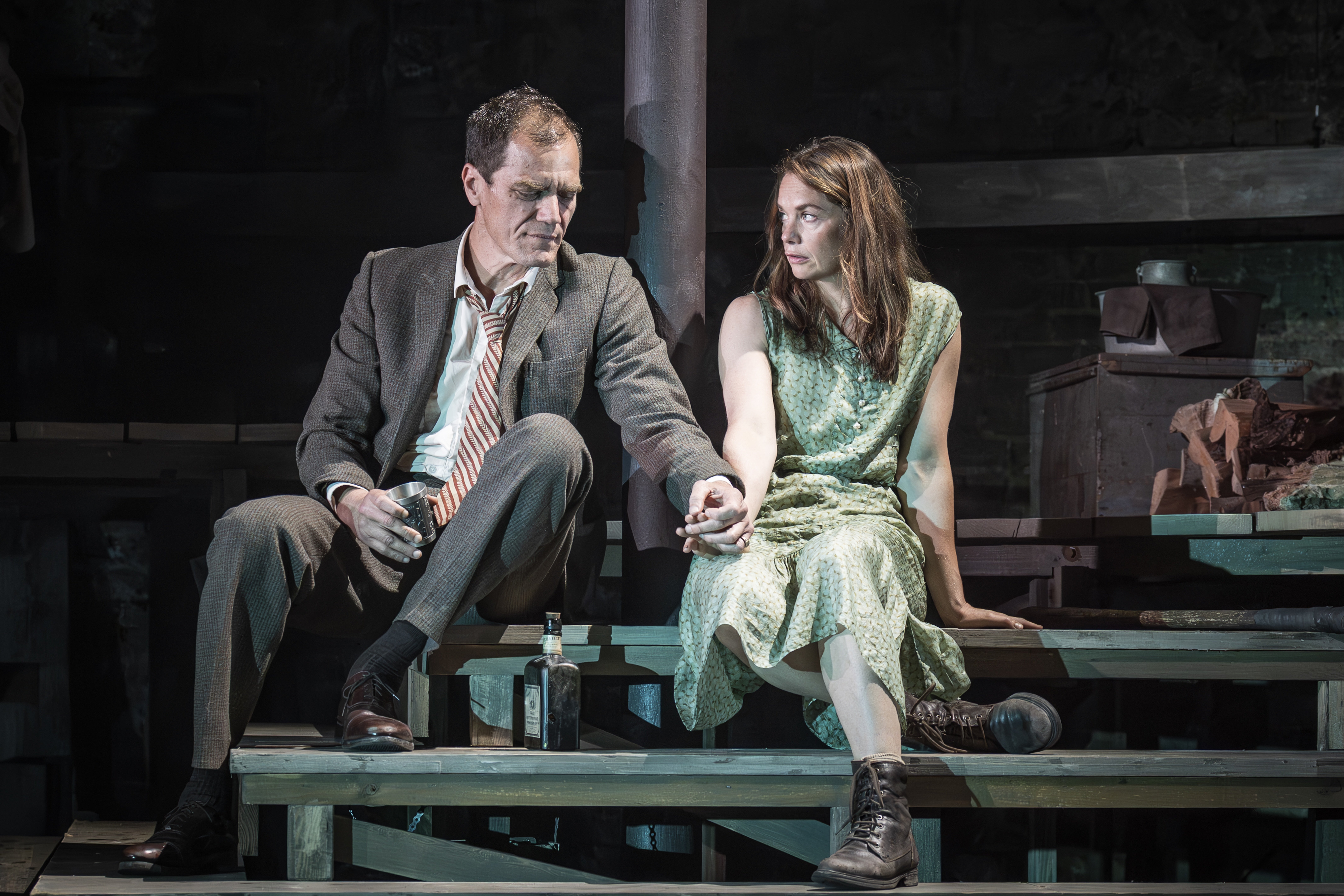
The moon illuminates Eugene O'Neill’s final play, supplying far more than just romantic mood lighting for its doomed central couple. It’s a searchlight, seeking out uncomfortable truths, exposing weaknesses in its bright beam and stunning people into madness. Rebecca Frecknall’s latest gorgeous resurrection of a mid-century American gem makes spotlights orbit round her cast on rollercoaster-style rails, capturing every shifting phase of their sub-lunar interactions. It’s utterly luminous.
Written as his powers faded, O'Neill’s play is an approximate sequel to his famous A Long Day’s Journey into Night, viewing the last surviving member of its family from an unsparing new angle. Here, wily farmer Phil (David Threlfall) and his seemingly tough-minded, rough-handed daughter Josie (Ruth Wilson) find that the farm they rent is on the brink of being sold by their tricksy alcoholic landlord James (Michael Shannon), a former actor who seems ready to deceive the family he was once so pally with. Or is he?
“There’s always a trick hidden behind your tricks,” Josie tells her father, and it’s a clue to the structure of this play. No one’s words or actions can be taken at face value. Threlfall and Wilson are brutally hilarious as they swear and scold each other like sworn enemies, but it’s a game – there’s a deep affinity underneath. And although the first act plays as a knockabout comedy about farms and financial trickery, this play is an exploration of love, and where its limits can be found.
-Meg-(Mae-Ann-Jorolan)-(Photo-by-Johan-Persson-Disney).jpeg?quality=75&width=230&crop=3%3A2%2Csmart&auto=webp)

The world has made Josie believe she’s not worthy of adoration. Perhaps the slender, averagely tall Wilson is an unexpected casting choice for the role of this daughter who’s meant to be “misbegotten” because of her towering height and size, and who continually describes herself as “an ugly, rough, cow of a woman”. Still, Wilson’s performance is full of fire and nuance – and (much like Frecknall’s casting of Patsy Ferran as an unexpectedly young Blanche in her acclaimed A Streetcar Named Desire) this choice intriguingly shifts the play, the gap between her appearance and the harsh terms she’s described in highlighting the cruel standards of the world she lives in. As the object of her desire, Shannon is almost comically inadequate, a shrunken memory of the man he should have been, as he captures an alcoholic’s shifts from gloomy introspection to empty talk to sudden playfulness.
O’Neill movingly (and writing with an alcoholic’s hard-won self-knowledge) shows how a cycle of shame traps James deeper and deeper in addiction. There’s an almost Christian belief in the power of forgiveness here – almost, because this play is bleaker than that, its hope tainted with experienced cynicism.
Still, if the message is dark, this production is full of wonder. Set designer Tom Scutt and lighting designer Jack Knowles collaborate to brilliant effect, creating a broken-down space that simultaneously evokes a time-worn family farmhouse and the backstage spaces James would skulk through in his acting days. And Wilson’s brilliant performance has an inherent dignity that means that the misogyny of the men around her is diminished, shown for what it is. Misery never shone so bright.
Join our commenting forum
Join thought-provoking conversations, follow other Independent readers and see their replies
Comments
Bookmark popover
Removed from bookmarks