Javier Bardem and Tilda Swinton sign ‘dismayed’ letter slamming Berlin film festival’s ‘silence’ on Gaza
Festival caught in controversy after jury president Wim Wenders says filmmakers ‘have to stay out of politics’


Javier Bardem, Tilda Swinton, and Brian Cox are among 81 artists who have signed an open letter addressed to the organisers of the Berlin Film Festival, questioning the “institutional silence on the genocide of Palestinians”.
The celebrities on Tuesday also called for Berlinale to take a clear stance on Israel’s war in Gaza.
The letter has come amid severe backlash to statements made by the festival’s awards jury president, Wim Wenders. The jury was asked about their views on on the German government’s “support of the genocide in Gaza” and the festival’s “selective treatment of human rights” issues, to which Wenders responded saying filmmakers “have to stay out of politics”.
“We are the counterweight of politics, we are the opposite of politics. We have to do the work of people, not the work of politicians,” he said.
Backlash to his statement followed immediately, and Booker winner Arundhati Roy, who was set to attend a screening of a restored version of her 1989 film In Which Annie Gives It Those Ones, also withdrew from the festival, saying she was “shocked and disgusted” at the remarks.
In the open letter, which has been published in full by Variety, the artists have said they are “dismayed at the Berlinale’s involvement in censoring artists who oppose Israel’s ongoing genocide against Palestinians in Gaza and the German state’s key role in enabling it”.
The letter accused the festival of “policing filmmakers” and described instances where filmmakers who spoke about Palestinians reported that they had been “aggressively reprimanded by senior festival programmers”.
“We stand with our colleagues in rejecting this institutional repression and anti-Palestinian racism,” the letter read.
Among the 81 artists who signed the letter are also Don't Look Up director Adam McKay, Portrait of a Lady on Fire star Adèle Haenel, Game of Thrones’ Carice Van Houten and Tobias Menzies, photographer Nan Goldin, and She Hulk star Tatiana Maslany.
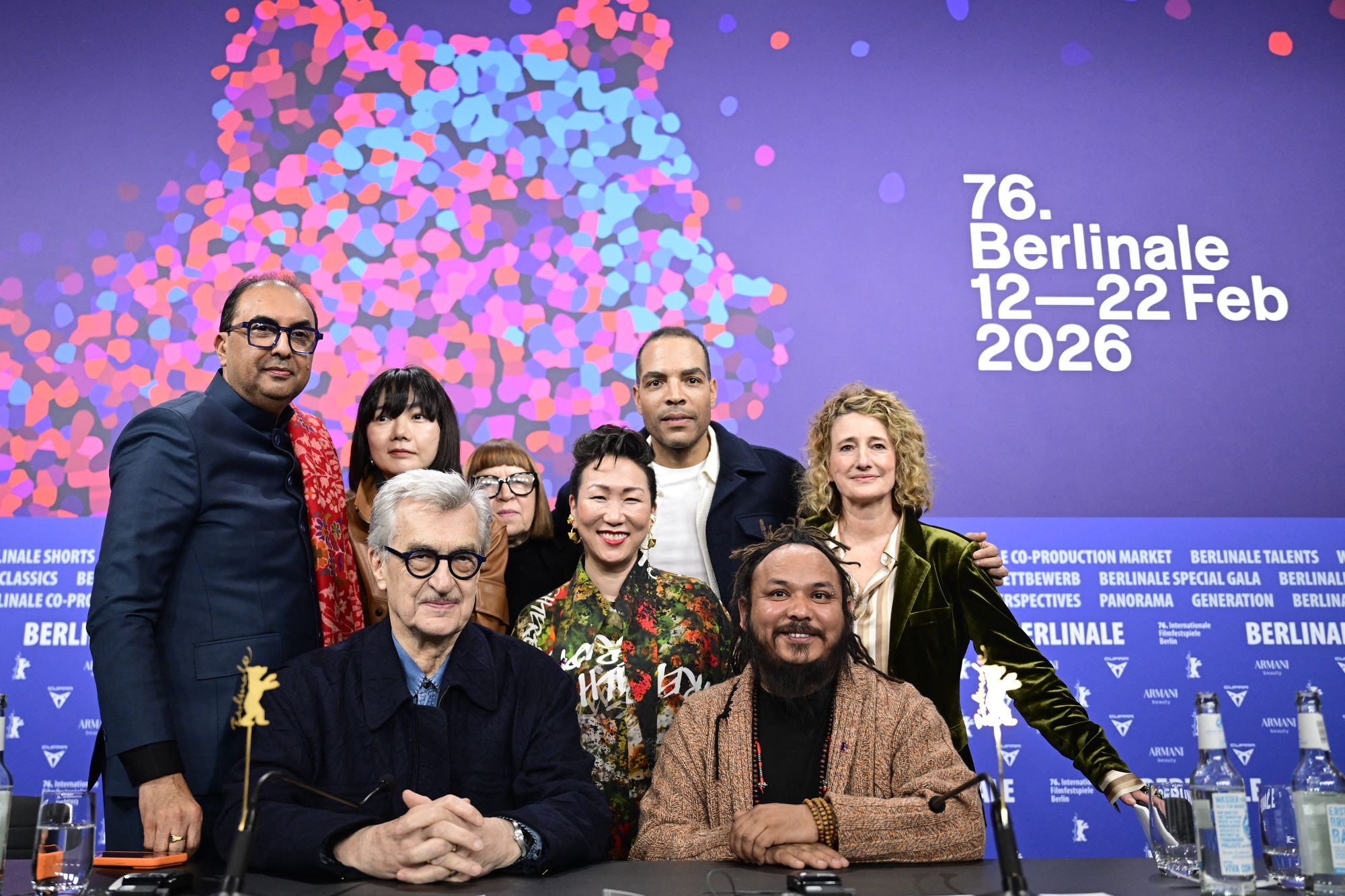
The signatories have written that they “fervently disagree” with Wenders’s statement on cinema being the “opposite of politics” because you “cannot separate one from the other”.
The signatories have also brought up Germany’s support of Israel, and the fact that “despite abundant evidence of Israel’s genocidal intent, systematic atrocity crimes and ethnic cleansing, Germany continues to supply Israel with weapons used to exterminate Palestinians in Gaza”.
The letter pointed out that “the festival has made clear statements in the past about atrocities carried out against people in Iran and Ukraine,” but is yet to “issue a statement that affirms the Palestinian right to life, dignity, and freedom” and “condemns the ongoing Israeli genocide of Palestinians”. In September 2025, a two-year United Nations investigation found that Israel committed genocide in Gaza.
“We call on the Berlinale to fulfil its moral duty and clearly state its opposition to Israel’s genocide, crimes against humanity and war crimes against Palestinians, and completely end its involvement in shielding Israel from criticism and calls for accountability,” it concluded.
The backlash against the festival’s stance has been consistent, with many on social media quoting from Wenders’s 1991 book, The Logic of Images, where he wrote: “Every film is political. Most political of all are those that pretend not to be: ‘entertainment’ movies. They are the most political films there are because they dismiss the possibility of change.”
At the same press conference, jury member and Polish producer Ewa Puszczyńska described the reporter’s question to Wenders as “unfair”.
“Of course, we are trying to talk to people and make them think, but we cannot be responsible for what their decision would be, to support Israel or to support Palestine,” she said. “There are many wars where genocide is committed, and we do not talk about them, so this is a complicated question and it’s a bit of an unfair question.”
Festival head Tricia Tuttle defended Wenders’s statement on Saturday, saying: “Artists should not be expected to comment on all broader debates about a festival’s previous or current practices over which they have no control.”
Israel’s brutal war on Gaza has killed over 71,000 Palestinians so far, reduced the besieged territory to rubble and displaced most of its 2.1 million people. The war began after about 1,200 people were killed during a Hamas attack on southern Israel in October 2023.
Join our commenting forum
Join thought-provoking conversations, follow other Independent readers and see their replies
Comments
Bookmark popover
Removed from bookmarks