Kiefer Sutherland: ‘After 24, I thought opportunities would be staring me in the face – but they weren’t’
The actor who gave us Jack Bauer talks to Louis Chilton about his new Christmas comedy ‘Tinsel Town’, the ‘ironic’ state of modern television, and why his acting style is so starkly different from that of his father

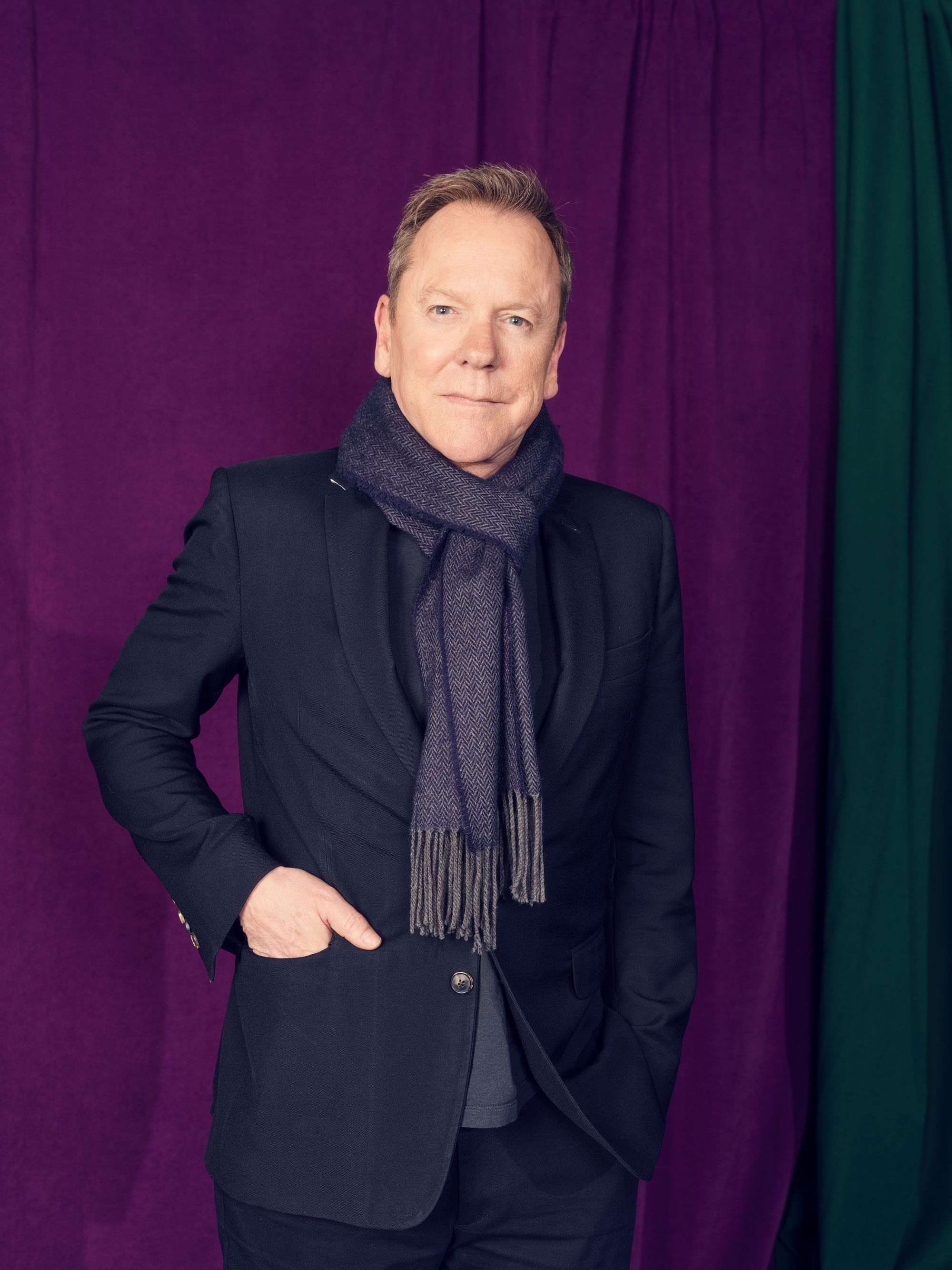
I’m sliding into 60 years old at 100 miles an hour,” says sprightly 58-year-old Kiefer Sutherland, “and I’m acutely aware of the fact that people cared more about what I thought when I was 30 than they do now.”
Whether or not this is true, it’s a fear that Sutherland – upstart son-of-a-legend turned all-action TV icon in the guise of 24’s Jack Bauer – has harnessed to compelling effect in recent years. It’s something he interrogated when he gave what may have been a career-best performance in 2023, playing a pitiful naval commander in William Friedkin’s final film The Caine Mutiny Court-Martial. “Everything about that character came down to being marginalised,” he says. “What happens when you hit an age in life when you’re redundant, when you don’t matter, when no one cares what you think. And when I put aspects of my own personal feelings into the character, for the first time, I felt empathy for him. He wasn’t an asshole any more.”
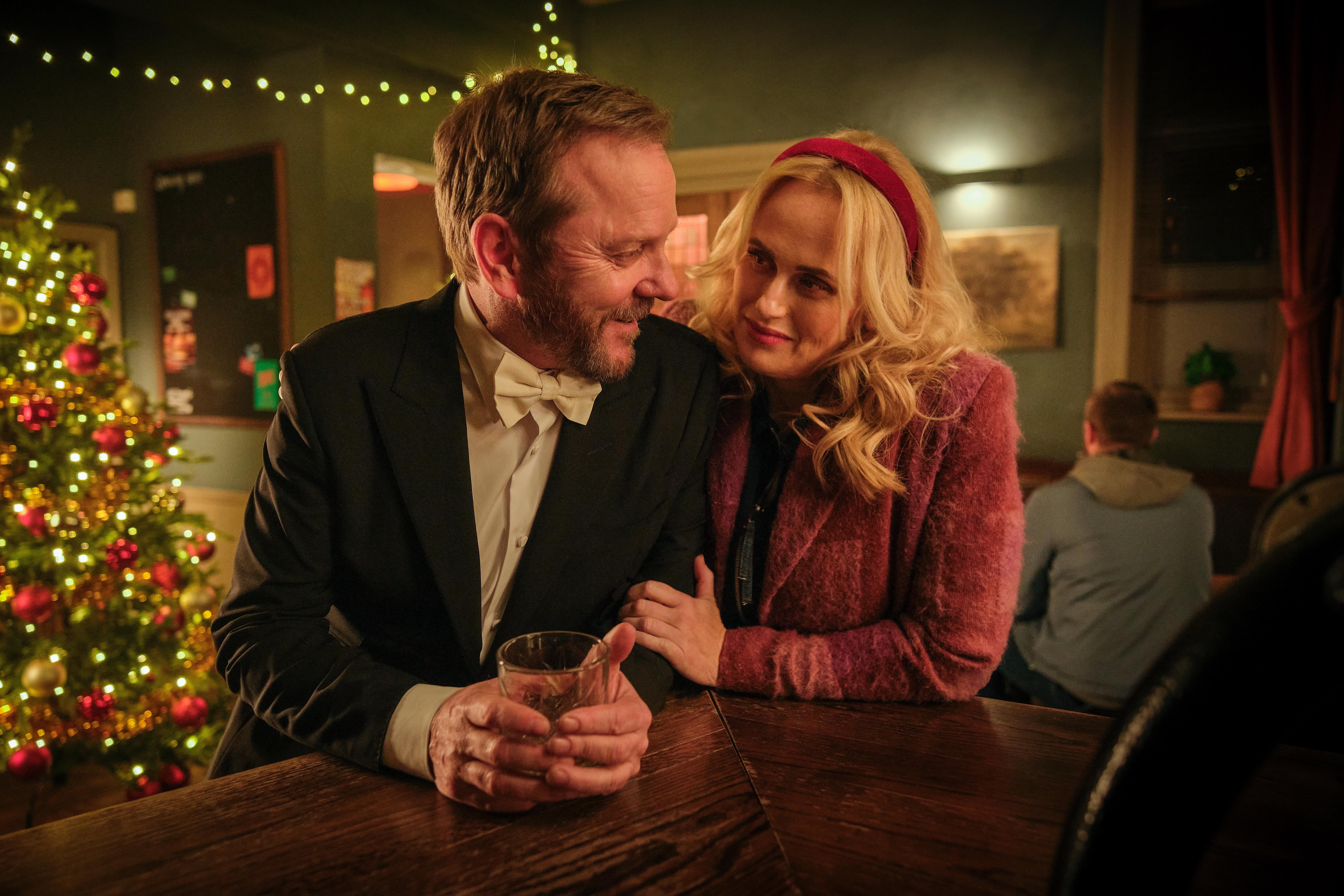
Sutherland, to be fair, doesn’t really seem like one either. He’s talking to me ahead of the release of Tinsel Town, a Christmas comedy dripping with self-parody in which he plays a Hollywood action star shanghaied into the Yorkshire Christmas panto scene. His character, Brad Mack, is a showbiz blowhard, whose dormant soft side takes some belligerent prompting – from his semi-estranged daughter, and a choreographer played by Rebel Wilson – to emerge. “The Brits do this kind of movie better than anybody,” says Sutherland. “Like The Full Monty... it’s just that small-town, heartfelt English story.
“There is always going to be the kind of archetypical impression of a Hollywood actor,” he adds, “and that’s fun to play and lean into. But as funny as all that stuff was, [Mack] becoming a better version of himself through his daughter was something that touched me personally.” Sutherland’s own daughter, Veep actor Sarah Sutherland, was born into his first marriage, with actor-writer Camelia Kath. “You start to believe, for yourself, that you have an insight worth sharing.”
Over the phone, Sutherland comes across as knowledgeable, sincere, and piquantly opinionated. A panto-based musical comedy was something of a hard leftfield lurch for the actor (“there were a few people in Los Angeles that were pretty surprised”), but he was drawn to the sheer tea-and-crumpets Britishness of it. Born in London in 1966, Sutherland admits to having a “romantic notion” of the UK – and it’s one that’s been reciprocated. “All the times I’ve visited the UK, there’s a part of me that feels like this is where I’m from,” he says. “I don’t know how to articulate this, but... people have been really supportive of me here.”
It’s very difficult for an audience to latch onto a show that only does eight episodes. Because just at the moment you’re really invested, it stops
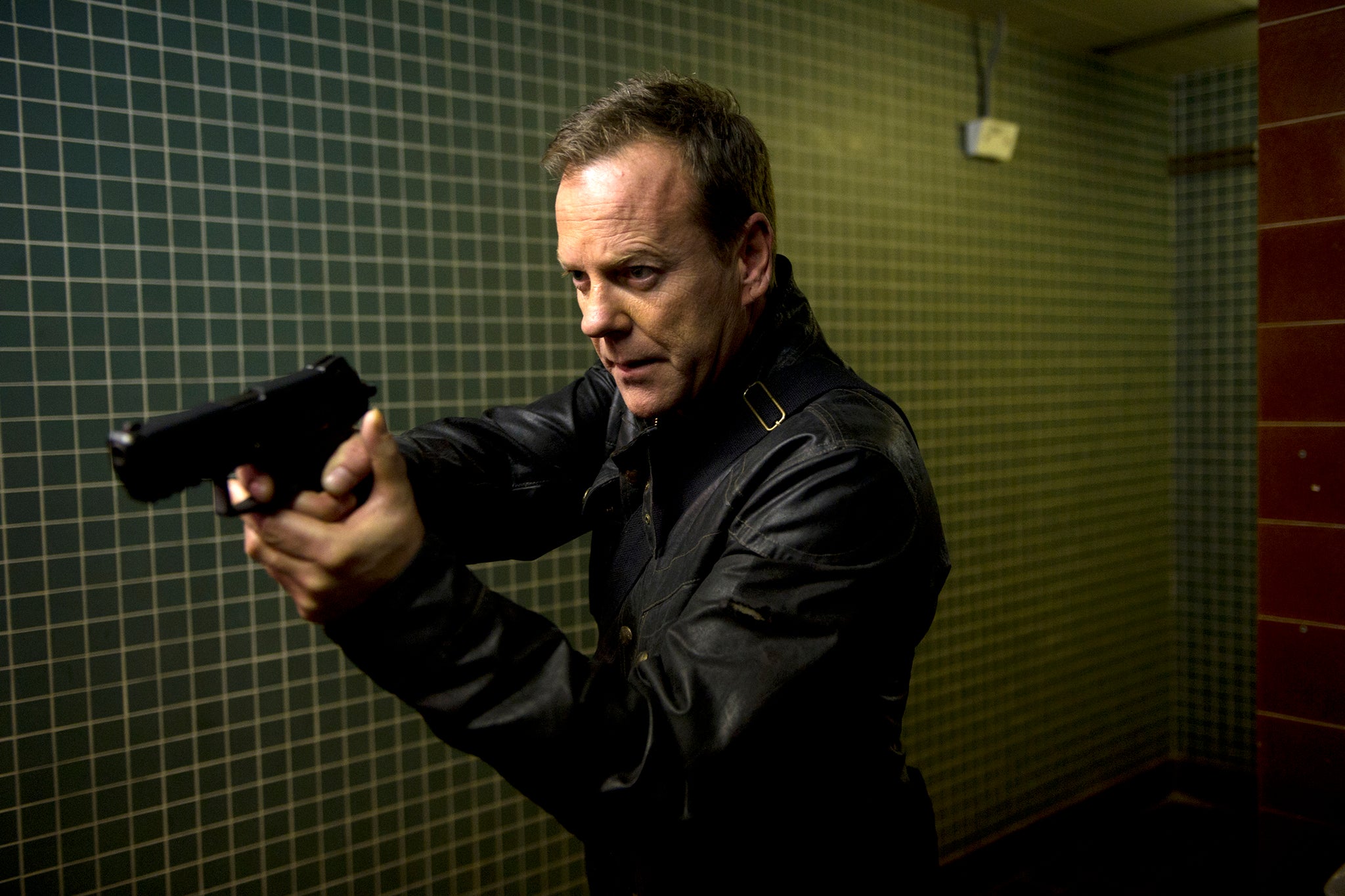
It is also we Brits, he suggests, who were responsible for the success of his golden goose, 24. “The series took about a year and a half to take off in the United States,” he explains, “while it caught fire in the UK almost immediately. Had it not been for the UK, there might very well have not been a season two.” There was, of course, a second season, then another seven seasons (and a film) after that, ossifying the realtime counterterrorism drama as one of TV’s biggest shows.
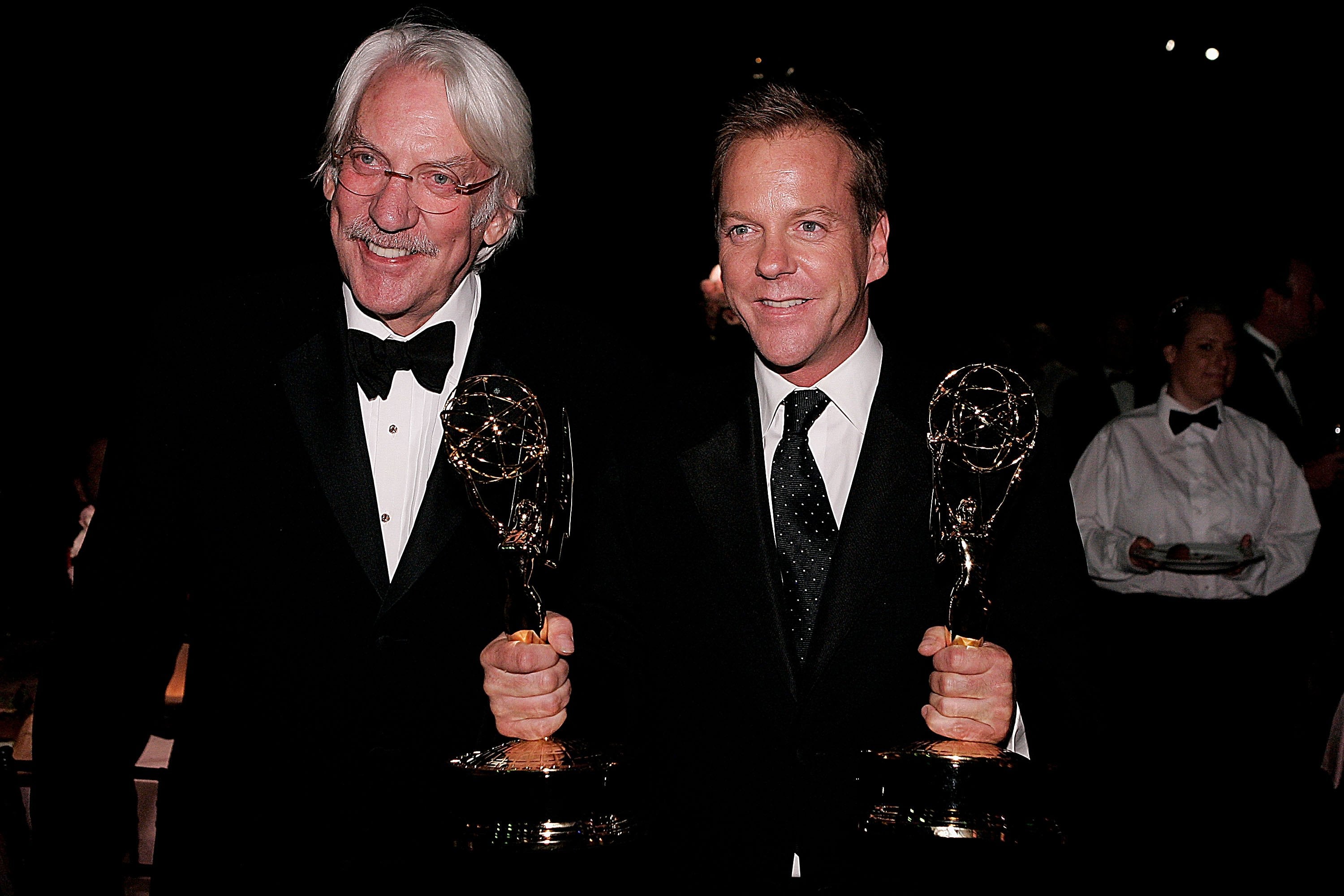
Sutherland moved away from Britain as an infant in 1968, when his parents, Canadian actors Donald Sutherland and Shirley Douglas, relocated to California; after their divorce, he lived with his mother in Toronto. What’s always been fascinating, I say, is just how different Sutherland is from his late father as an actor, despite their striking resemblance.
Donald, the revered star of seminal films such as Invasion of the Body Snatchers and M*A*S*H, always had a sort of dishevelled charm about him, an innate, only half-suppressed wildness. His son, meanwhile, has always been brittler: whether it’s Jack Bauer or Ace, the menacing hoodlum in Stand by Me, Sutherland’s characters are often men stretched taut by temperament or circumstance. It’s why those people who were eager to fan-cast Sutherland in his late father’s role for the new Hunger Games prequel are so off-base: yes, they look alike, but the vibes could hardly be more distinct.
This, Sutherland suggests, is down to his “mum” (pronounced closer to the English way than the Americanised “mom”), a “really gifted theatre actor” in her own right. “At a very early age, my twin sister and I would finish school and go to the theatre,” he says. “And we’d do our homework, my mum would do her performance, and then we’d go home. And so I was exposed to that at a very early age.
“I couldn’t see my dad’s movies when I was a child, because they were always restricted and you could only see them in a theatre. So I didn’t really see any of my father’s work until I was 18, when VHS recordings were becoming available. And by then I already had a pretty strong definition of what I thought good acting was, and what I wanted to aim at – based on the Canadian theatre actors I watched growing up.”
As well as developing his own style, Sutherland pursued a radically different career path from his father, in terms of the kinds of project he took on – though not necessarily by choice. “My dad came up through a time when, in America, the writing was as good as it’s ever going to be in the history of film,” says Sutherland. “Whether it was The Godfather or all those scripts that had been held through the blacklist in the Fifties and Sixties, all of a sudden there was just a wealth of material that exceeded everything else. You had the opportunity to do Casanova, 1900, Don’t Look Now, and Ordinary People. I mean, try and find that material now. Good luck – you won’t. And he took advantage of those opportunities in an extraordinary way.”
Of course, there were still opportunities to be found in the decades that followed; for Sutherland, this meant shifting predominantly to television around the turn of the century, having made his name in post-New Wave Hollywood films such as The Lost Boys (1987) and Young Guns (1988). In his father’s era, a decade-long spell on network television would have constituted a stark demotion. But when Kiefer booked 24, big-name stars were just beginning to explore television as an artistically viable alternative. (Martin Sheen, for instance, had signed onto The West Wing just two years prior.)
“I’ve never really had a very specific idea of where I want to take my career,” Sutherland admits. “Looking back, there are moments when I wish I had been that guy.” Such as when, I ask? “Almost from the beginning. I had kids at a very early age. I had responsibilities, and I had to make a lot of choices early on in my career... There was a financial component to those choices, more than I wish there had been. And so, some opportunities, I had to pass on. And I regret that.”
This aversion to big-picture thinking has continued throughout Sutherland’s career, and while it allows for unexpected diversions into fare such as Tinsel Town – or his well-received side project as a singer-songwriter – it proved particularly tricky in the early 2010s, when his stint as Jack Bauer reached its end. “After 24, I thought I would just naturally have a bunch of opportunities staring me in the face,” he muses. “But the truth is, if you don’t create those opportunities, they’re just not there. As someone who likes to work, there have been times when I haven’t worked for a while – because I didn’t do a lot of the planning that’s required.” It has to be said that he did find new, interesting work after 24 ended, such as Lars von Trier’s Melancholia, or his three-season run as the lead of Netflix’s political thriller Designated Survivor.
By this point, our phone call is nearly up. I can almost hear the 24-style ticking clock chugging along in the background. I bring up The Pitt – HBO Max’s ER-esque medical drama, whose real-time premise has spawned ubiquitous comparisons to 24. It is, in many ways, a throwback to a near-extinct model of television production: The Pitt’s first season comprised 15 episodes – rank profligacy by modern standards – and it’s set to return for season two just a year later. Does the success of this show, both in ratings and at the Emmys this year, suggest that there’s a wider appetite for more traditional television?
Sutherland thinks for a second. “It’s very difficult for an audience to latch onto a show that only does eight episodes,” he says, “because just at the moment you’re really invested, it stops. Then you gotta wait a whole year to write eight more and do it again. And in the context of [what TV used to be], that’s not even a full f***in’ season. 24 made 24 episodes a year, and that takes three years for a modern show to do. And it’s the difference between having a serious relationship or an affair.
“I think people are missing the relationships they had with ER, or 24, or NYPD Blue,” he continues. “It was something you could rely on. I shaped my Wednesday around this show, and I’m gonna have dinner at this time. It’s something I look forward to. Just like sports fans with Monday Night Football, and they’ve ruined that now, because you need five different streaming services to watch the game.”
He keeps talking – and talking. “And people want it for free, too,” he adds. “They used to have it for free. Now, they’ve got a streaming service they’re paying for – and then they’ve stuck commercials on the streaming service. And you’re paying for it! I mean, it’s really ironic that they basically reinvented television, but they’ve managed to get you to pay for what you used to get for free.”
If anyone’s qualified to speak on the state of modern television, with all its flaws and contradictions, it’s Kiefer Sutherland, a man who has his own immutable place in the history of it. He may indeed be sliding into 60, but maybe we should all still care what he thinks.
‘Tinsel Town’ is streaming on Sky Cinema and NOW
Join our commenting forum
Join thought-provoking conversations, follow other Independent readers and see their replies
Comments
Bookmark popover
Removed from bookmarks