The Salt Path scandal has blown up, but there is already another memoir storm brewing
As Raynor Winn’s beloved tale of resilience faces claims of fabrication, Rowan Pelling reflects on the seductive power of storytelling – and how it feels when the truth bends too close to home


It’s hardly news that some autobiographical tales are embroidered. The late Clive James brilliantly called one of his volumes Unreliable Memoirs to underline the fact that authors tend to jazz up their anecdotes. But there’s embellishment and there’s ripping apart at the seams, inserting brocade and a cross-stitched Homer Simpson, and trying to insist your endeavour is as authentic as the Bayeux Tapestry.
That’s famously what happened with James Frey’s account of drug addiction, A Million Little Pieces, in which many details were shown to be fictionalised – including the claim that he’d spent 87 days in jail after a fracas with the police, rather than a few hours.
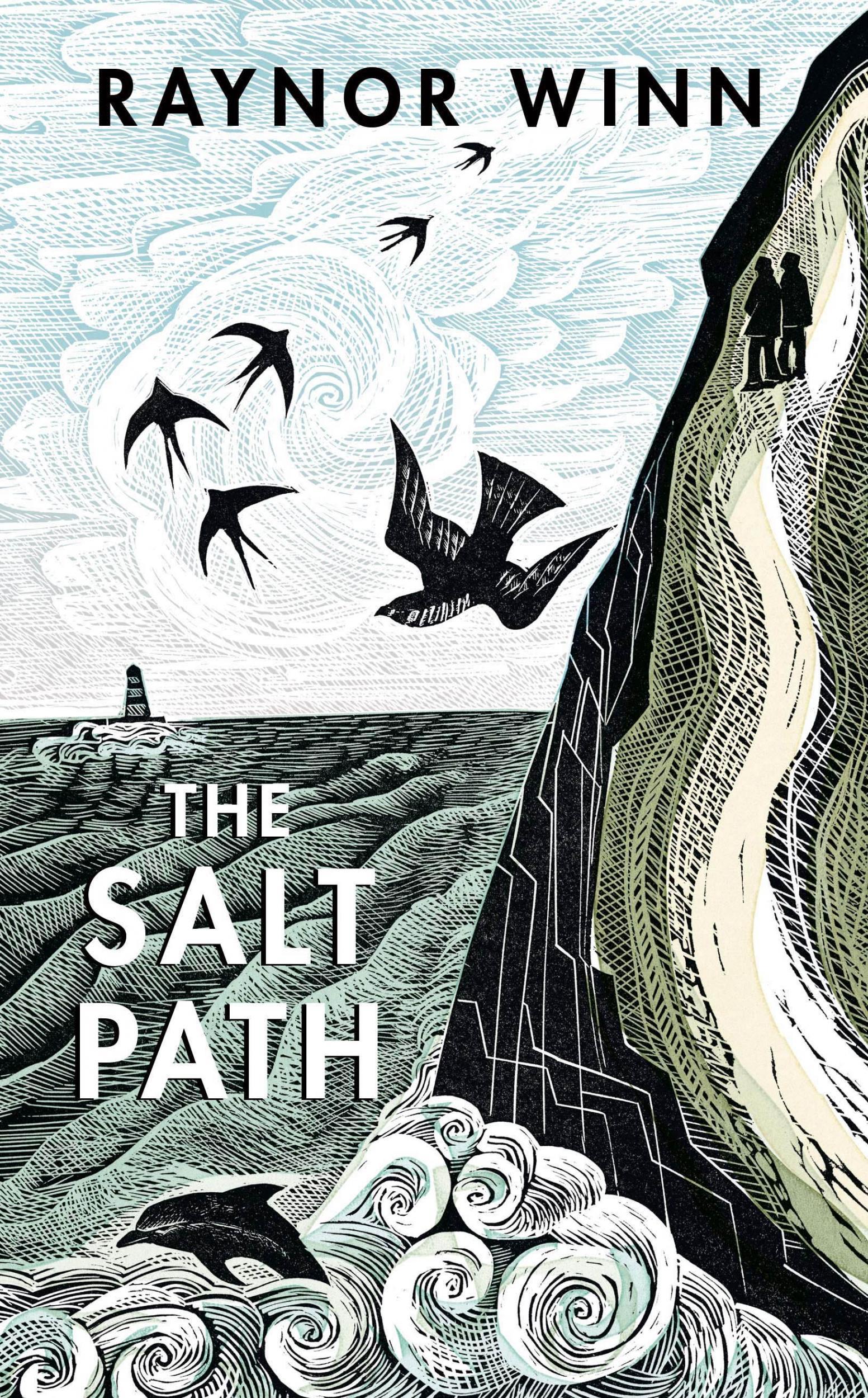
And now similar accusations have been levelled against the massive UK bestseller The Salt Path, by Raynor Winn. The book is billed as the redemptive tale of a couple who lose their Welsh home after a bad investment in a friend’s business and the unexpected discovery that their property is considered collateral. Notching up blow upon blow, Raynor then discovers that her husband, Moth, appears to have CBD (an incurable, degenerative condition much like Parkinson’s), and the duo set off on an epic 600-mile coastal walk to find themselves through nature. By the book’s end, they’ve had an epiphany, and Moth has even found his symptoms much alleviated.
The only problem is, it has been claimed that the truth may be somewhat different. An investigation by The Observer has raised doubts about many aspects of the book – which was turned into a bestselling film starring Gillian Anderson – and accused Winn of “embezzling” money from a former employer, of not using her real name, and of failing to reveal the truth about the health of her husband and other things that inspired her book.
The couple insist that the book is “the true story” of their journey, but we now know that Raynor and Moth Winn’s real names are the rather less exotic Sally and Tim Walker. According to The Observer’s report, Sally stands accused of defrauding a small family company to the tune of £64,000, meaning that the couple had to borrow cash from a relative of Tim using their house as collateral. When the relative’s business collapsed, the loan was called in, and the amount owed by then was close to £150,000, necessitating the sale of their house.


It is also claimed that the couple own a run-down, uninhabitable property in France that was never mentioned in the book. Finally, and most seriously, questions have also been raised about Tim/Moth’s illness, as some consultants who treat CBD say they find it implausible that a sufferer would be helped by a mammoth walk, let alone survive the next 18 years. Those who have the condition are generally dead within six to eight years, and people who survive for longer tend to be extremely disabled.
The author has issued a statement via her agent saying that the Observer story is “highly misleading” and that she and her husband are “taking legal advice”, leaving gossip bloodhounds eagerly awaiting the next instalment. I must confess I am far more interested in this scandal than in the uplifting, nature-cure “memoir”.
Like millions of others, I find there is something that speaks to the basest and most childish part of human nature in looking at a perfect story arc and then watching it collapse.
We saw this in the case of Elizabeth Holmes, poster-girl CEO of US-based Theranos, a company that claimed to be able to diagnose multiple illnesses via a single drop of blood. She garnered $700m (£514m) in investment, and endless gushing articles, for a machine that never worked. She is now in prison serving an 11-year sentence for defrauding investors. But that’s a tiny con compared to that perpetrated by Sam Bankman-Fried, who misappropriated billions of dollars’ worth of funds deposited with his cryptocurrency exchange FTX.

Compared with these titans of grift, any writer who self-mythologises or augments elements of a supposedly true tale is small fry. But the question of “how did they think they’d get away with it” remains utterly compelling. Take Herman Rosenblat, who appeared to have written a dead-cert, moving bestseller in the shape of his holocaust memoir Angel at the Fence: The True Story of a Love That Survived. Rosenblat claimed that he’d first met his wife when, as a nine-year-old child, she had passed food to him through the electrified perimeter fence of the Schlieben concentration camp in Germany.
Years later, they were reunited by chance on Coney Island and worked out the past connection, or so the narrative unfolded. The book was cancelled two months before publication (after Oprah Winfrey had described it on her show as the greatest love story she’d ever heard) when key details were found to be untrue. What makes the case particularly poignant is that Rosenblat and his wife were genuine holocaust survivors, and he had been imprisoned in Schlieben. The embroidery seemed totally unnecessary, and yet, as all writers know, there’s a very porous line between fact and fiction. Publishers tend to reserve their biggest advances for the most Hollywood-perfect stories, and in Rosenblat’s case, he had pre-sold film rights to the memoir for $25m.
Sometimes money isn’t part of the motivation so much as the writer’s desire to make themselves the hero of their own story. Someone I once knew, who was involved in the literary world, became fixated with a bestselling travel writer who had spent time in central Asia. At one point, she even claimed to have received a marriage proposal from him – although she also said around this time that her phone was being tapped by MI5. This obsession eventually led to her writing a memoir about her own adventures in the same part of the world: an account that, for readers in the know, bore unnerving similarities to the travel writer’s original volume.
By far the oddest element of that book was the author’s claim to have been close to the scene of one of the 7 July terror attacks, and to have cradled a dying passenger. Perhaps she truly was a real-life Florence Nightingale, but it seemed odd that she hadn’t been called to give evidence to the exhaustive enquiry that followed the bombings. I then discovered, via a chance conversation, that sixth-form girls at my old school had picked the book for their reading group. I told a member of staff why I had qualms about the book’s authenticity, so the group turned their conversation into a discussion about a writer’s duty to tell the truth, and how to best spot what we’d now call misinformation.

Even as I write this, I’ve been tipped off that a major scandal might blow up over another “nature-adjacent” memoir by a female author. Meanwhile, just look at the private online debates that happen whenever a celebrity memoir emerges that doesn’t mention a cocaine habit or inconvenient love affairs. We writers are jealous souls by nature, fiercely resenting No 1 sales spots being taken by memoirists whose lives have taken an unexpectedly gripping turn (or who are protected from consequences by an army of lawyers and publicists).
My siblings and I used to lament that our parents were far too kind for us to be able to write a devastating childhood memoir. And when I do write about my family, it’s inevitable that one of them will phone and complain about an errant detail, as no two people remember things with the same inner lens and tape recorder.
One of the worst episodes in my journalistic life happened after I’d written a column on misadventures with air rifles, and how boys always end up accidentally shooting a friend in the bottom. I’d recounted a story involving my brother and a schoolfriend, whom I named as I thought the parents (old friends of my mother) would find it funny – their son had been the living embodiment of Just William, always in trouble.

I remembered the incident well, as I’d watched my mum dig the pellet out with a blade. Instead, I found myself accused, by the outraged parents, of lying. It transpired that my mother – who adored this naughty schoolboy – had never breathed a word to the other family. All stories are dependent on one’s wider perspective. Age, vantage-point, and built-in prejudices come into play, hence that hideous modern disclaimer “my truth”.
Despite these evident pitfalls, the abject hunger for “true stories” in publishing – a factor that makes them ever more transferable to Netflix – never abates. I often wonder, if Nancy Mitford were writing her novels now, whether The Pursuit of Love, with all its nods to the eccentricities of the real-life Mitford family, would be billed as a memoir. The reading public no longer desires a roman à clef, instead wanting raw, titillating facts to slobber over and digest – a notion that can implant impure motivation in desperate writers.
You can absolutely understand the temptation to step into a more successful, inspiring life, with movie deals, celebrity acquaintances and plaudits. Does that lead to obfuscation? In the case of The Salt Path, only time and legal expertise will tell.
One thing remains certain, which is that human beings are far odder than we will ever know. The unvarnished truth is often better than the glossed-up version. Deeds can be beyond all fathoming; there are heroes, villains, writers, fantasists and desperados. That, in the end, is why we read: to enter other worlds, test their boundaries, and see what those realms say about us.
Join our commenting forum
Join thought-provoking conversations, follow other Independent readers and see their replies
Comments
Bookmark popover
Removed from bookmarks