George Saunders on his timely new novel: ‘Is the billionaire megalomaniac based on anyone? I’ll be careful and say no…’
In his latest novel ‘Vigil’, the Booker Prize-winning author imagines an oil baron on his deathbed. Speaking to Nick Duerden, he reflects on his late-blooming success and how he holds on to hope amid the current ‘sickening’ state of his home

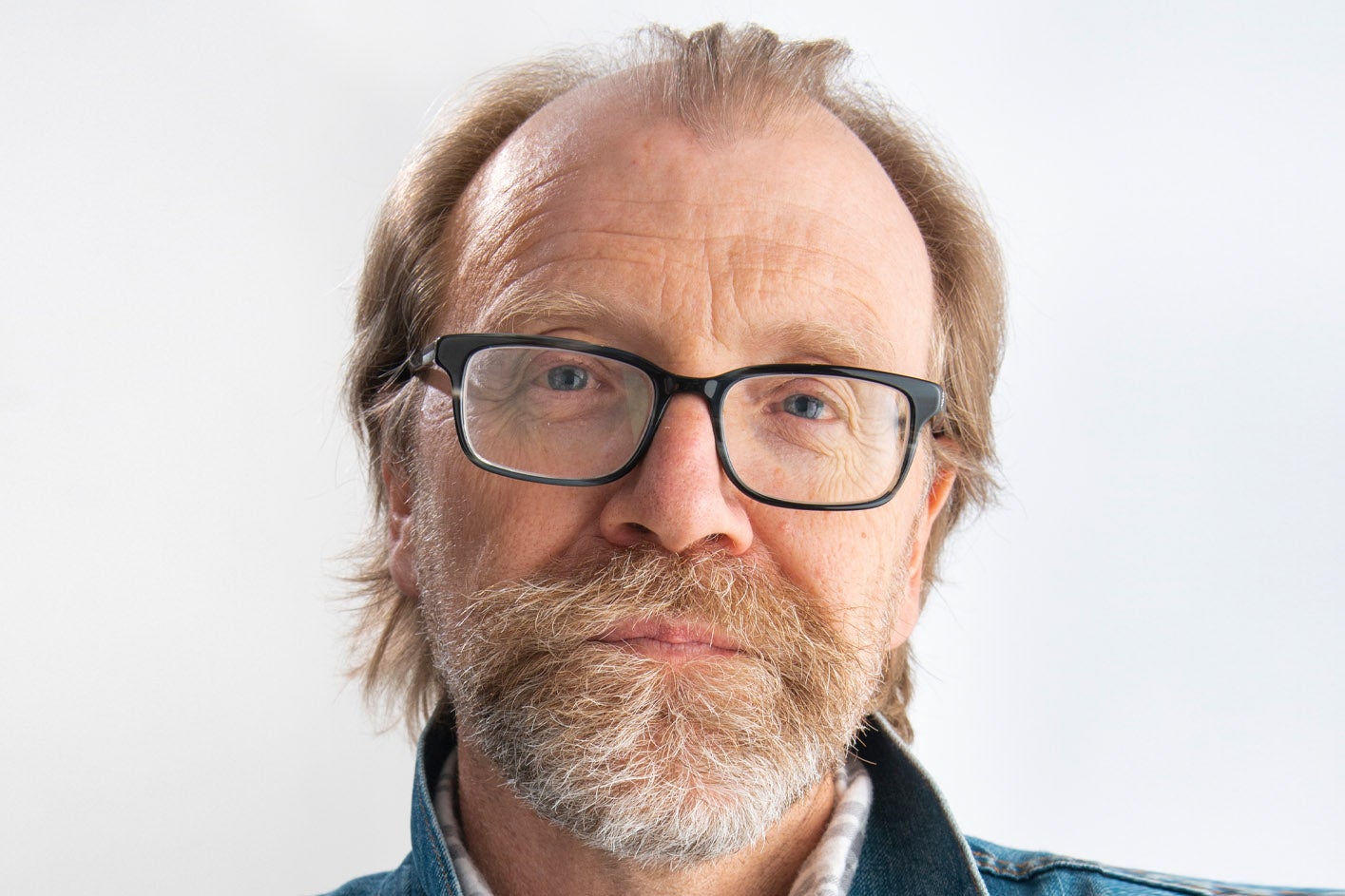
If happiness really does write white, then authors everywhere must be overjoyed in these oppressively dark days. The more dangerous the world becomes, and the more despotic its leaders (objectively insane, some might say), the more there is to address on the page.
George Saunders, one of America’s leading and most incisive writers, is surely pinching himself. But, no. Right now on my laptop screen, the 67-year-old looks utterly bereft. “What’s happening in my country is sickening, disgusting, and it’s all happening so quickly,” he says. “I’m so confused about it all that I don’t even know where to start. It’s unimaginable to me that this group of clowns is going to bring the whole experiment [of America] down.”
It’s been a busy few news weeks in America, but then when hasn’t it? In the days before we speak, Trump has announced himself interim president of Venezuela, threatened to invade Greenland, and has permitted ICE operatives essentially to invade Minneapolis, causing havoc in its streets. This has resulted in the deaths of two American citizens, Renee Nicole Good and Alex Pretti. “It’s all incredibly distressing,” Saunders says.
I liked the idea of meeting someone at the end of their life, and seeing whether they’re prepared to account for their actions
He may at some point write about it, in pursuit, he tells me, of better understanding. “I’d love to do a non-fiction piece, interview all these people like Marco Rubio [secretary of state], Kristi Noem [Homeland Security secretary] and JD Vance [vice-president]. I come from a similar class background to some of them, so I can speak their language. But would they even agreed to see me?” He looks into the middle distance as if he might find there some prevailing sense. “But maybe that won’t be the best use of my gifts? Maybe I’ll just write another novel instead.”
He’s about to publish Vigil, his first novel since his 2017 Booker Prize-winning Lincoln in the Bardo. Like that book, which saw Abraham Lincoln grieving the death of his young son in a graveyard filled with ghouls, this one is also concerned with the liminal intersection of life and death. In Vigil, KJ Boone is an 87-year-old billionaire oil baron on his deathbed, with a ghost by his side to help him on his journey. The ghost is good in her postmortal work. To date, she has successfully ushered 343 souls into the hereafter, but Boone quickly proves her most difficult client. It’s not so much that he’s not ready to die, but that he isn’t willing first to atone. Atonement is usually an integral part of the deal.
“When this book announced itself to me, it came with a very consistent through-line, a catchphrase, almost: schmuck dies,” Saunders says from his home in Santa Monica. “And because it takes place over a five-hour period, I had a feeling I could sustain it to novel-length.” Accomplished as Saunders is at writing, it doesn’t necessarily come easily to him. “I’ve written a lot of short stories over the years, and you tend to construct them inch by inch, sweating over every paragraph. It’s a laborious process.” Vigil, at just 172 pages, makes for a short novel, but it still took him two years to write.
Saunders found himself drawn to the subject of imminent death, he says, because he’s long been fascinated by the narrative arcs in works like A Christmas Carol, It’s a Wonderful Life, Citizen Kane and certain Tolstoy stories. “I liked the idea of meeting someone at the end of their life, and seeing whether they’re prepared to account for their actions.”
And was Boone, I ask, a man replete with monomaniacal tendencies and bottomless wealth, based on any modern-day figures? He offers a wry, secretive smile. “I think I have to be careful here, and so I’ll say no.”
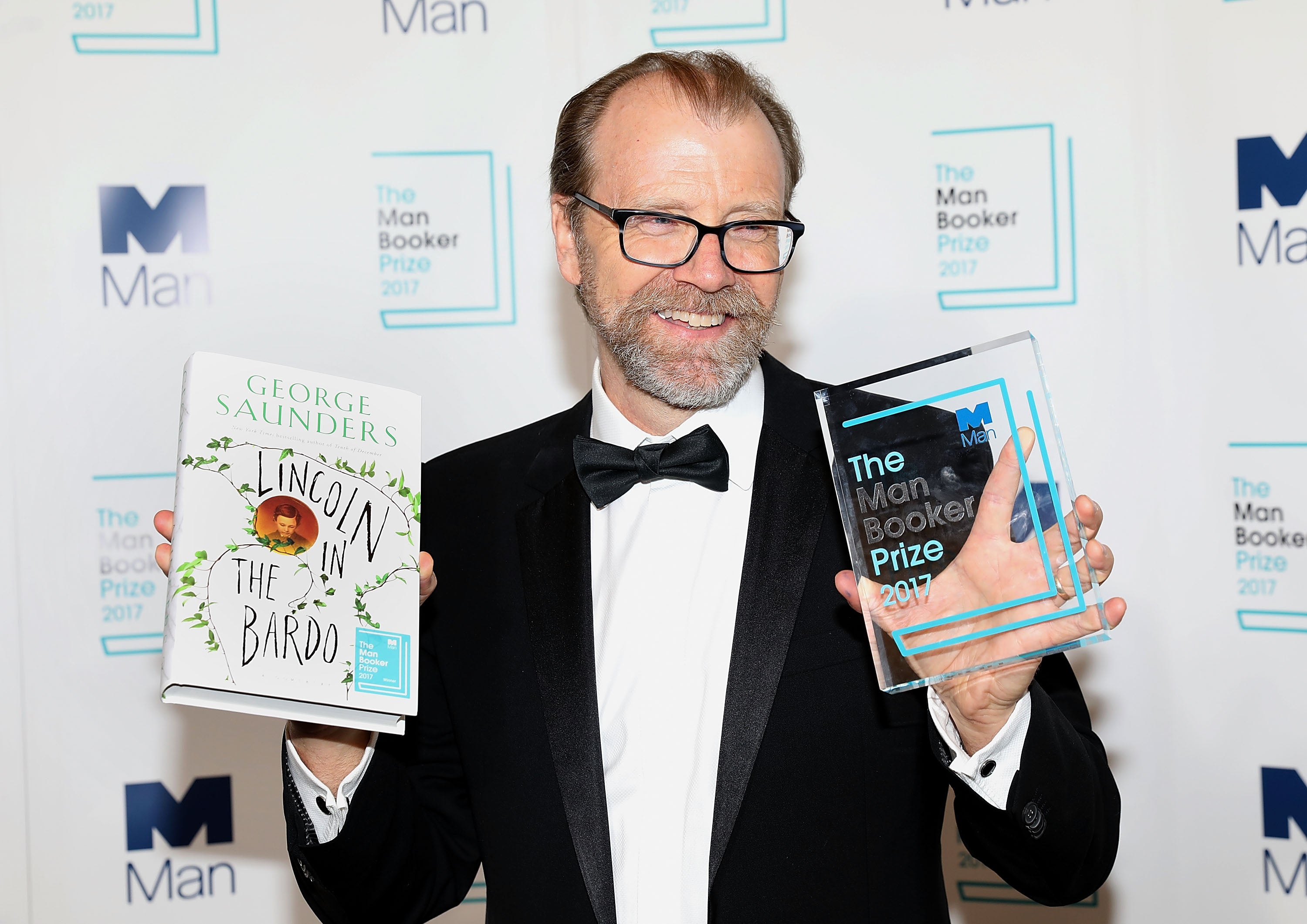
Saunders came relatively late to writing. He was born in 1958 to a working-class family in Texas, and, following school, worked in various jobs, including as a roofer in Chicago, and in the oil industry in Sumatra, Indonesia. He was obsessed with Ernest Hemingway and, in his downtime, tried to write short stories in a similar vein. “But nowhere near as good, of course.” Still, he kept at it. “I’ve always felt drawn to writing. Even as a young kid, I had really strong reactions to text. I knew that language makes us who we are, and that if we improve our language, we might become different people.”
In the late 1980s, he enrolled in Syracuse University’s prestigious creative writing programme where he studied under the novelist Tobias Wolff. He later returned in 1996 as a teacher, and continues to teach there to this day. “Over the years, I just fell in love with it. And teaching writing went on to become an intrinsic part of my own writing process.”
It was his teaching that inspired 2021’s A Swim in a Pond in the Rain, a non-fiction book in which he took apart some of his favourite Russian short stories to see how they work. Saunders himself is anything but a straightforward prose stylist. Instead, his approach is experimental, fantastical, his narratives jumpy with energy and, as he admits himself, sufficiently “dense” that “not everyone will be able to decode it”. He is the kind of writer who demands of the reader a certain attention, and then repays it. His creative writing guide prompted the creation of his Story Club with George Saunders Substack, where he shares advice and writing prompts with his 300,000 followers.
I'm too old to indulge any neurotic self-flagellating over my Booker win
Following several short story collections, Saunders eventually delivered his first novel, Lincoln in the Bardo, at the age of 59. He was by then settled in life, married to the writer Paula Redick, and father to two now grown-up daughters. Its success came as a considerable surprise.
“I wasn’t even really sure that it qualified as a novel,” he says. “But winning [the Booker Prize] was the most amazing thing; I enjoyed every aspect of it. If, as a writer, you’re always trying to raise your ceiling, then to have that kind of endorsement helps a lot. It’s like: I won the Booker! I should try something hard next!”
He refused, however, to allow the win to cast too much of an inhibiting shadow. “Any neurotic, self-flagellating impulse that does arise about not being able to top my Booker win is quickly banished,” Saunders says. “I’m too old for that. I’ve a series of mental exercises I do that ensure I’m not going to feel any more anxiety than I already feel naturally.”
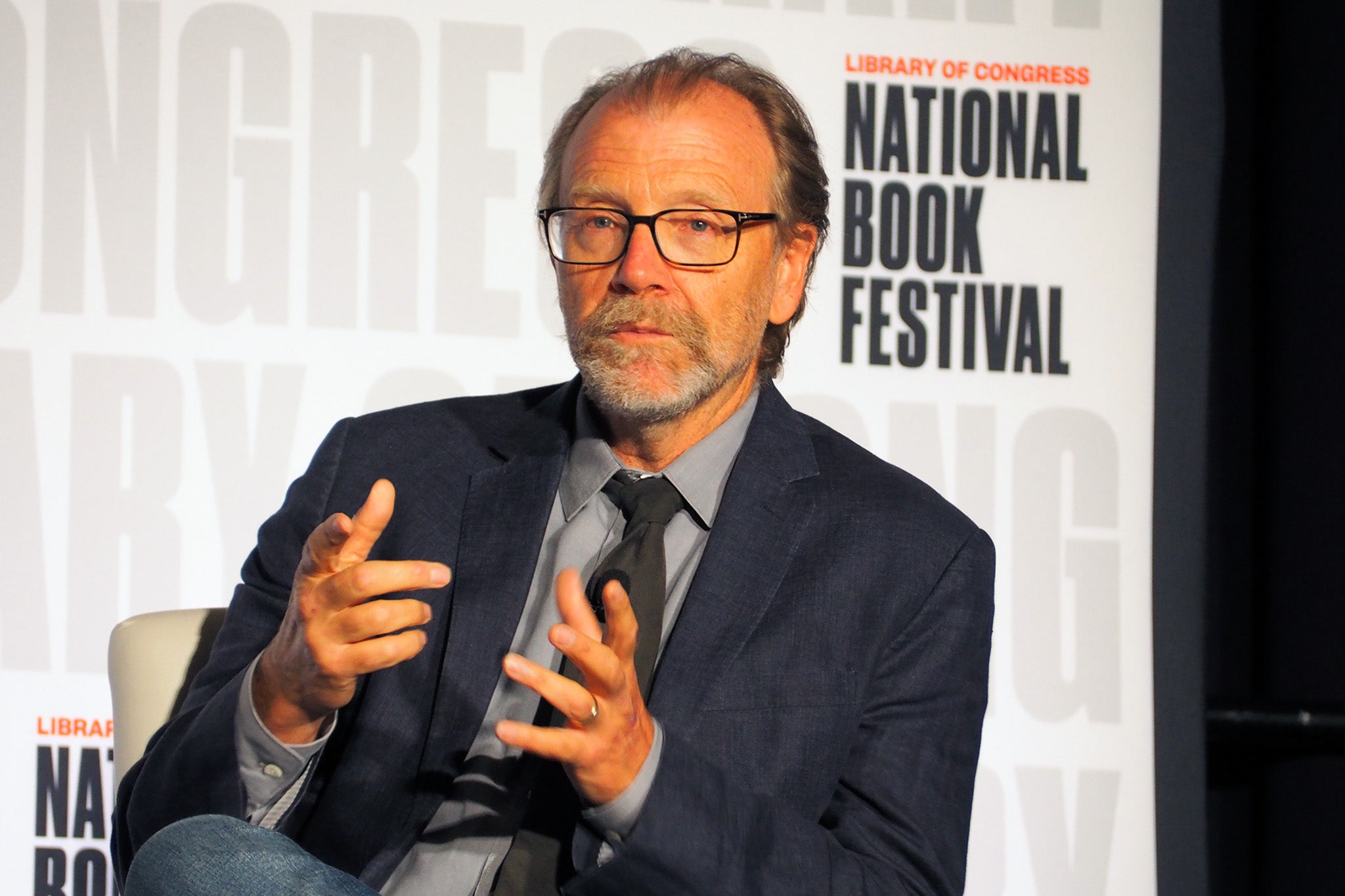
And yet here we all are, nevertheless, in a world riddled with anxiety and existential dread. How on earth does he cope? “Right now, I’m feeling a big separation between the country I love with the current government,” he says. “This is an extremist government, but they only won by 55 per cent to 45 per cent, so I’m not sure how much longer it can hold out. But if I was European, I’d be running like hell to find a different way to think about the world. This problem that we’re having is not a one-off. It’s deeply systemic. Every day Trump is in office, it becomes normalised, and that is very sad to see. We’ve really s*** on our nest, haven’t we?”
I tell Saunders I’m keen to understand how it affects daily life for the average American, when what we see on this side of the Atlantic is a country on the brink of implosion. “Well, that’s the funny thing. When I walk down the street here in Santa Monica, you wouldn’t know anything was amiss. I don’t hear political arguments in the street, at the airport, or sporting events.”
Which must be a relief, no? “Well, in some ways, it’s scarier. All this crazy stuff is happening – the dreadful events in Minnesota, in particular – and people are living as usual. Right now, the government are like thieves in the house. They’re rushing through, breaking things just to break them. I don’t think the majority is going to tolerate that for too much longer. They’ve tolerated it for too long as it is.”
“Personally,” he says, “I’m just trying to stay optimistic. I once heard a Tibetan Buddhist teacher say that the most negative emotion is despair, even more than anger. If the people who remember the former vision of America can stay solid, and funny, and energetic – and not despair – then I think we’ll ride this thing out. That, at least, is my hope.”
‘Vigil’ by George Saunders is published by Bloomsbury
Join our commenting forum
Join thought-provoking conversations, follow other Independent readers and see their replies
Comments
Bookmark popover
Removed from bookmarks