Implausible plots and over-the-top prose – forget the haters, Dan Brown’s new novel will be an instant bestseller
As the much-mocked, juggernaut writer prepares to release his latest Robert Langdon thriller, Nick Duerden dives deep into the Dan Brown mythology to understand the author’s mind-boggling appeal


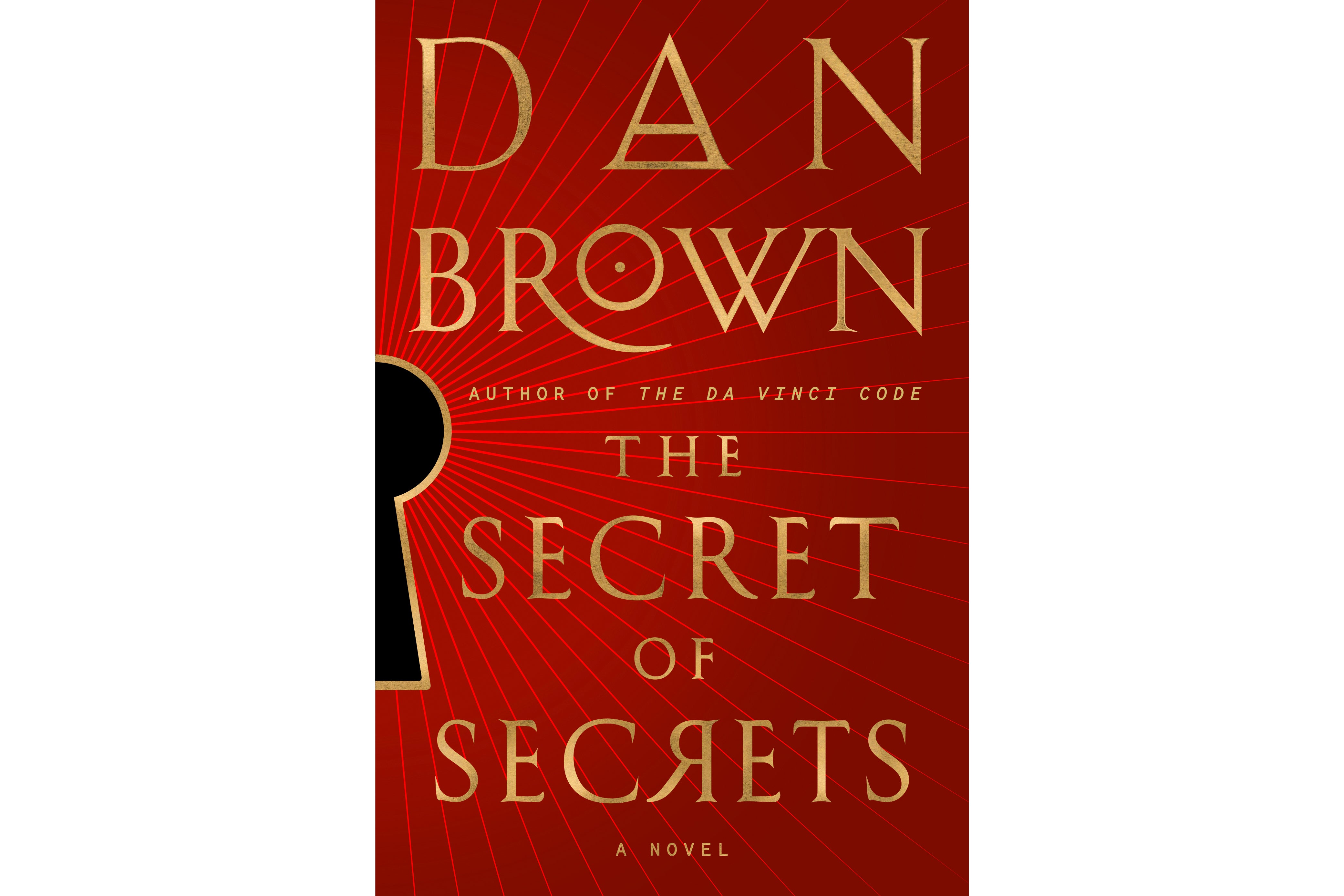
There cannot be many writers for whom the announcement of a new novel makes headline news around the world, but such is the widespread appeal of Dan Brown. Back in February, the American author of The Da Vinci Code, the 2003 conspiracy thriller that went on to sell 80 million copies and kickstart a globally successful literary and cinematic franchise, revealed that The Secret of Secrets, the sixth instalment of the adventures of Robert Langdon, would be published in September.
“The world’s most celebrated thriller writer returns with his most stunning novel yet,” proclaimed Brown’s website, promising “a propulsive, twisty, thought-provoking masterpiece that will entertain readers as only Dan Brown can do”.
Pre-orders began pouring in, with bookshops already preparing shelf space for what is sure to be an instant bestseller. In the world of literature, the very fact of a book receiving so much publicity is an unambiguously good thing, not least in a climate in which, we are repeatedly told, people are reading fewer and fewer books. Even those most resistant to fiction will make an exception for Brown’s deep dives into religious iconography, secretive societies, and a protagonist who spends 500 pages running from one fetching international locale to the next – invariably with an attractive woman in tow.
Brown, now 61, had been a sometime songwriter and full-time school teacher when he turned to writing novels in the late 1990s. He wrote two airport thrillers (Digital Fortress in 1998, and Deception Point in 2001) that failed to set the world alight, but in between them, in 2000, published Angels & Demons. The book was a mystery thriller revolving around Robert Langdon, a Harvard professor who finds himself embroiled in a high-profile murder when a physicist is killed; the only clue is the word “illuminati” branded on his chest. Langdon, an expert on symbology, is brought in to investigate.
The book was not initially a huge success – that said, it would belatedly become one in the wake of its sequel’s broader appeal – but Brown was clearly taken by his literary creation. Robert Langdon was Indiana Jones in a crumpled suit – in possession of an inquisitive mind that could, and often did, get him into trouble. Brown returned to Robert with The Da Vinci Code three years later, which proved the kind of runaway bestseller every writer dreams of.
In The Da Vinci Code, Langdon finds himself mired once more in murder, this time in Paris. A museum curator has been found dead in the Louvre, his naked body carefully arranged on the floor and surrounded by a series of baffling codes that has the local police scratching their heads in confusion. Langdon, accompanied by a pretty French cryptologist called Sophie Neveu, begins to probe. When the police then grow suspicious of him, Langdon flees, attempting to solve the codes as he goes. It’s like sudoku, but at 100mph.
The early reviews were often enthusiastic, but always mixed. The New York Times lavished praise, calling it “an exhilaratingly brainy thriller”; Mark Lawson in The Guardian described it as “irritatingly gripping tosh”.
You can rather see Lawson’s point. The book is complex, filled with conspiracy theories, and features a series of religious conundrums that the reader feels almost capable of solving. Brown’s fans quickly became legion, and three more in the Robert Langdon series would follow: The Lost Symbol (2009), Inferno (2013), and Origin (2017). To date, they have sold a combined 250 million copies, which is a lot.
Success breeds contempt, of course. It always has. But here, it was different. As the years passed and more Langdon books were published, there was not so much contempt directed towards Dan Brown as hilarity and open mocking. Critics – of the professional and the online kind – lined up to poke fun at his unlikely plot twists, and the stumbling clatter of his prose. While it’s true to suggest that obscenely successful novelists do receive more scrutiny than their less successful counterparts, no one ever really doubted JK Rowling’s ability to write, nor James Patterson’s or Lee Child’s. EL James, author of the BDSM saga Fifty Shades of Grey, is one other author to have suffered comparably. Her books had initially started as Twilight fan-fiction before galloping off on their own highly distinctive bent, to the pleasure of millions of readers and the derision of, seemingly, everyone else.
To a reader coming to Dan Brown for the first time, as I did only a few months ago to write this piece, it’s easy to see why he is so mercilessly mocked. Everything everyone ever said about him is true. His writing style is both inimitable (the very title of his forthcoming novel, The Secret of Secrets, is so Dan Brown), and all too easy to send up. Every sentence is overloaded with words: unnecessary descriptions stacked alongside endless waffly exposition until they begin to tilt like the Titanic after hitting the iceberg.
“She was moving down the corridor towards them with long, fluid strides,” Brown writes in The Da Vinci Code. “A haunting certainty to her gait. Dressed casually in a knee-length, cream-coloured Irish sweater over black leggings, she was attractive and looked to be about 30.” He goes on: “Her perfect burgundy hair fell to her shoulders, framing the warmth of her face. This woman was healthy with an unblemished beauty, and a genuineness that radiated a striking personal confidence.”

Elsewhere, when Langdon has cause to call someone on the telephone, Brown attempts to ratchet up the tension thus. “[He] dialled the number. The line began to ring. One ring… Two rings… Three rings… Finally, the call connected.” And there are 500 pages of this – per book. In the world of Dan Brown, less is very much not more.
Nevertheless, the plot moves on rapidly, and those 500 pages zip by. I have little idea of the accuracy of Brown’s art history, or his true knowledge of religious iconography, but didn’t much care. Ultimately, his books are cat-and-mouse chases, while his protagonists – Langdon plus each successive female associate – are volubly brainy, corduroy-clad professor types with Apple watches and the taut hamstrings necessary for all that running.
The author himself can afford to be blithely unconcerned with such snark – you try selling 250 million books if you think it’s that easy – but he has occasionally responded to his detractors. “Of course we’re all supposed to pretend we don’t read the reviews, or at least we don’t care,” he said in 2018. “The reality is you want everybody to love what you do and, when it doesn’t happen, when you read a review – and certainly, especially, in [the UK] there have been some pretty vicious reviews – you have to just sort of laugh and say well, OK, clearly this person doesn’t share my taste. You get past it at some point and you have to put the blinders on.”
He does have his literary supporters, too. “I think that sometimes in the book world there’s a false association that suggests if a book sells a lot, then it must be no good,” says Kate Mosse, author and founder of the Women’s Prize for Fiction. For her, the announcement of Brown’s new book is cause for celebration.
“The fact that a book like The Da Vinci Code has got millions of people reading, many of whom have quite readily admitted that they haven’t read fiction since school, is terrific, frankly,” she says. Brown’s novels, she argues, “are great cracking adventure stories, and have all the ingredients you could want from such a book: a setup, a conundrum, characters with interesting jobs, great suspense, and twists and turns. I think he succeeds completely in what he sets out to do, and for this he should be judged accordingly”.
I think he succeeds completely in what he sets out to do, and for this he should be judged accordingly
As to whether it’s a problem that his plots are laden down with implausibility – about the church, religion, and how it’s possible for someone to spend so much time on the run without ever once requiring a toilet break – Mosse has a particularly persuasive riposte: “Was Moby-Dick plausible?”
The huge success of The Da Vinci Code meant that big screen adaptation was inevitable. In 2006, Ron Howard (Apollo 13; A Beautiful Mind) began the process of turning Brown’s books into action-adventure movies. Tom Hanks would star as Langdon, in a wrinkled suit and sporting, of all things, a mullet. But despite an impressive cast – the three films to date have featured, variously, Audrey Tautou, Sir Ian McKellen, and Felicity Jones – each has been curiously unsatisfying, the breathless action burdened by overly complicated scripts and the kind of hammy performances one would expect from a US daytime soap. Hanks’s modus operandi throughout is to frown with great severity.
The three films have a mean average of 28 per cent on Rotten Tomatoes, and finding any positive things to say about them proves a challenge. “Snortingly preposterous,” said the BBC of the first instalment; Rolling Stone compared the third to “a trip to hell and back”.
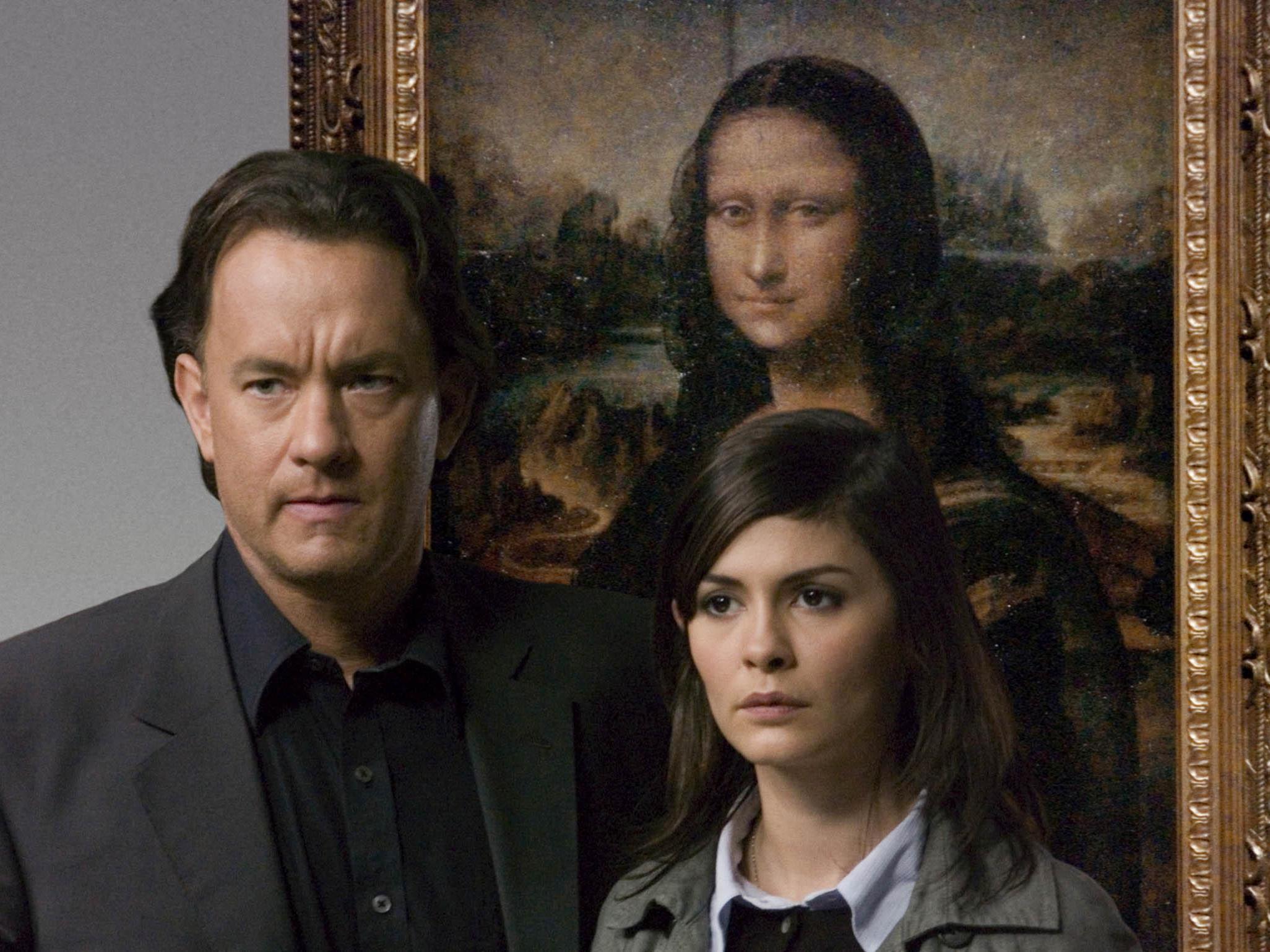
But then poor Tom Hanks never stood a chance. According to the film critic Xan Brooks, films like these never really flatter their stars. “There are two breeds of film adaptation,” he explains. “The first is the kind of small book/good story scenario, where the filmmakers aren’t really banking on the readership to go along with them, because there is no readership. They’re free to tweak or muscle the story into something that suits them.” One example he cites is Jonathan Glazer’s startling, Oscar-winning adaptation of Martin Amis’ The Zone of Interest. “But the other kind,” Brooks continues, “is the global bestseller, where the readership has to be brought along, and where every word is sacrosanct.”
In these cases, he says, “the filmmakers become less like creative artists than expert removal men, reassembling the book for a different platform but keeping it the same. The results are very respectful but far too reverent.” Reverence is the overriding problem. “Dan Brown’s books are complicated things. They’re filled with secrets and symbols, puzzles, and codes, and these work better on the page than on the screen. But because the adaptation is so faithful, they require the characters to speak an awful lot of exposition. And that just feels crude, and horribly clunky.”
That said, the films were far from box office disasters. Each made money, and so an adaptation of The Secret of Secrets seems inevitable even before its release. Will Brooks see it? “Only in the line of duty.”

Often, the measure of true literary success lies in the influence it subsequently wields across the cultural landscape. For years after Bridget Jones, you couldn’t move for facsimile romantic comedies, while Harry Potter rejuvenated both young adult fiction and an appetite for magic.
And then there is parody. There were countless EL James parodies, for example, including one with a gardening bent: Fifty Sheds of Grey. For all the reasons mentioned above, Dan Brown is ripe for parody: in 2017, The Spectator held a competition for readers to submit a parody piece in the “inspired awfulness” of the author. A new iteration – The Secretest Secret of Secrets – is very quick off the mark, and will be published in the very same week as The Secret of Secrets.
The book is the brainchild of social media comedy writer Dan Bowman (not an anagram of his target, but almost). It revolves around a cryptographer, Professor Lawrence Lightwood, and historian Dr Dolores Delgado, as the pair search for a sensitive document hidden somewhere inside the Sphinx, in Egypt.
I wouldn’t quite call my book a love letter to Dan Brown, but it’s certainly a tribute
“It’s not an actual parody of the new Dan Brown book because I haven’t read the new book yet,” Bowman points out, wary, perhaps, of copyright infringement. “Rather, it parodies – gently – the Robert Langdon series in general, largely because I think the series lends itself so well to parody.”
Bowman began writing it within weeks of Brown’s announcement, after the idea had been percolating for some time. While The Secretest Secret of Secrets is unavoidably silly, one might argue that it is no more so than its inspiration. But it’s also very funny, and packed with actual puzzles, too.
“I think the Dan Brown books have such a wide appeal because they touch upon subjects that we all have a little bit of interest in: religion, architecture, secret societies, conspiracy theories,” he says. And while he doesn’t consider them “high literature”, the series is, he insists, “a lot of fun”. And fun to parody, too? He nods. “I wouldn’t quite call my book a love letter to Dan Brown, but it’s certainly a tribute.”

Slings and arrows like these are unlikely to trouble Dan Brown much. The Secret of Secrets – which is about noetic science (“a multidisciplinary field that combines objective scientific tools and techniques with subjective inner knowing”) and is set in picturesque Prague – is likely to be the biggest-selling book of the year this autumn. It will get people reading, says Kate Mosse, and what’s not to applaud about that?
“There are so many places in the world where people are not allowed to read, and so anything that reminds us of the importance of books, and the joy that comes from reading, is great,” she says. “When his new book comes out, there will be people in every country around the world doing the same thing at the same time: reading it. I think that’s joyous.”
She’s right, it is joyous. And anyone wishing to spoil the party by arching an eyebrow can simply move along – or stop typing. “If you don’t like him, then don’t read him, read something else,” Mosse says. “It really is that straightforward. Instead of being mean-spirited, I think we should celebrate books that are getting out and into people’s hands. Don’t you?”
‘The Secret of Secrets’ is published on 9 September
Join our commenting forum
Join thought-provoking conversations, follow other Independent readers and see their replies
Comments
Bookmark popover
Removed from bookmarks