John Suchet: How Beethoven taught me to overcome whatever life throws at you
Newsreader John Suchet has been fascinated with the composer Ludwig van Beethoven since his teen years, and his latest book on him will be his eighth and his most personal yet. Here, he explains the life lessons all of us can learn from a composer who kept going, even when he became deaf...
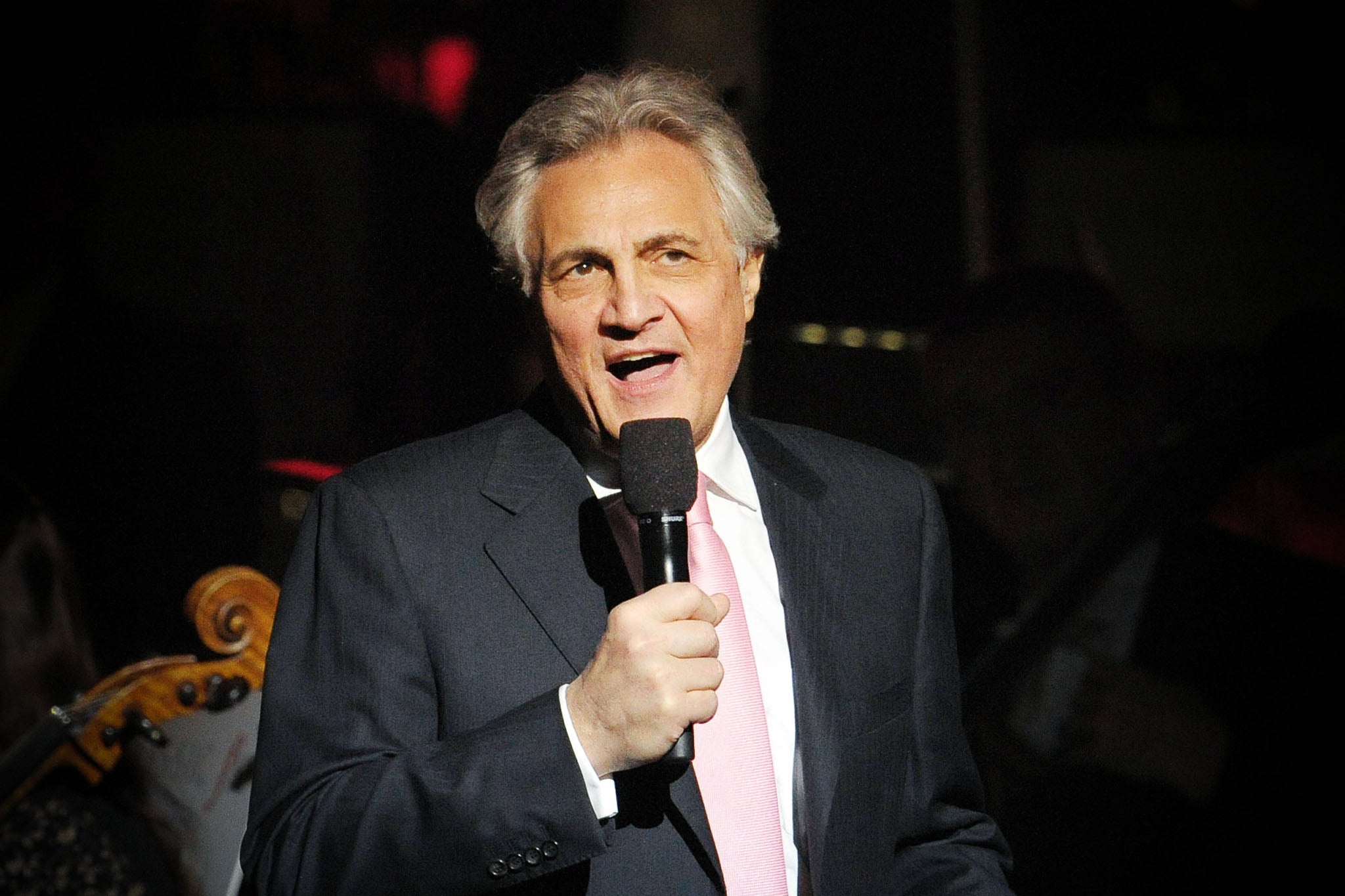
Can you remember when you first heard a piece of music by Beethoven? That last question I can certainly answer. I was 17, on a school trip to Vienna, and on the final night our teacher had secured seats at the Vienna State Opera, up in the gods, to see Beethoven’s opera Fidelio. I remember the overture’s opening flourish, followed by thunderous applause and cries of “Bravo!” I had slept through the whole thing.
A mere 23 years later, I was an ITN reporter on a midnight ferry from Limassol in Cyprus to Beirut to join my camera crew to cover the Lebanese civil war. In my pocket, a battered Walkman and a single cassette tape, Beethoven’s Symphony No 3 (Eroica).
In the dead of night, salt water spray blowing into my face, the red glow of war in the distance – and I was steaming towards it – I blew the Eroica into my head.
Those massive opening chords, the whiplash of the repeated discords, the lone horn entry in the “wrong” place; the funeral march of the second movement, the skittishness of the third, and the ultimate triumph of the final movement. Or, to put it another way, a life confronted by one problem after another – difficult childhood, always the outsider, loneliness, failed relationships – just like you and me, and every other human being.
But Beethoven had one other blow he had to contend with, the one sense that in him should be more acute than any other, the one sense essential to his calling, the reason for his existence: his hearing. And it was failing, and he knew it would continue to worsen until he was completely deaf. What, he felt, was the point of living if he could no longer hear his own music?


That point came, yet instead of yielding to it, he fought it. He continued to compose, his works becoming all the greater, and ultimately, in the late string quartets, an intimate and searing baring of his soul.
We should not be surprised that Beethoven, by confronting his deafness, overcame it. The final triumphant movement of the Eroica, composed in his early thirties, tells us as much. And that is Beethoven’s message to us of future generations. “If I can confront the worst fate that can befall a musician and overcome it, then you, in your turn, can likewise overcome whatever life throws at you.”
I know that is true, because soon after my trilogy was published in the late 1990s, a man wrote to me saying that when he was 16, his elder brother, a soldier, was killed in Northern Ireland. Six months later, his mother died. “Only Beethoven’s music got me through,” he wrote. At about the same time, after a talk I gave on Beethoven, an elderly man came up to me and said, “I just want you to know Beethoven saved my life. Twice.” He walked away without telling me how Beethoven saved his life, but I can quite believe he did.
Three summers ago, my wife Nula and I were sitting in the garden of a small cottage in a northern suburb of Vienna called Heiligenstadt. I began to tell Nula the significance of this cottage and the part it played in Beethoven’s life. He came to stay there in the spring of 1802, aged 31, to get away from the noise and dust and dirt of Vienna, and rest his ears.
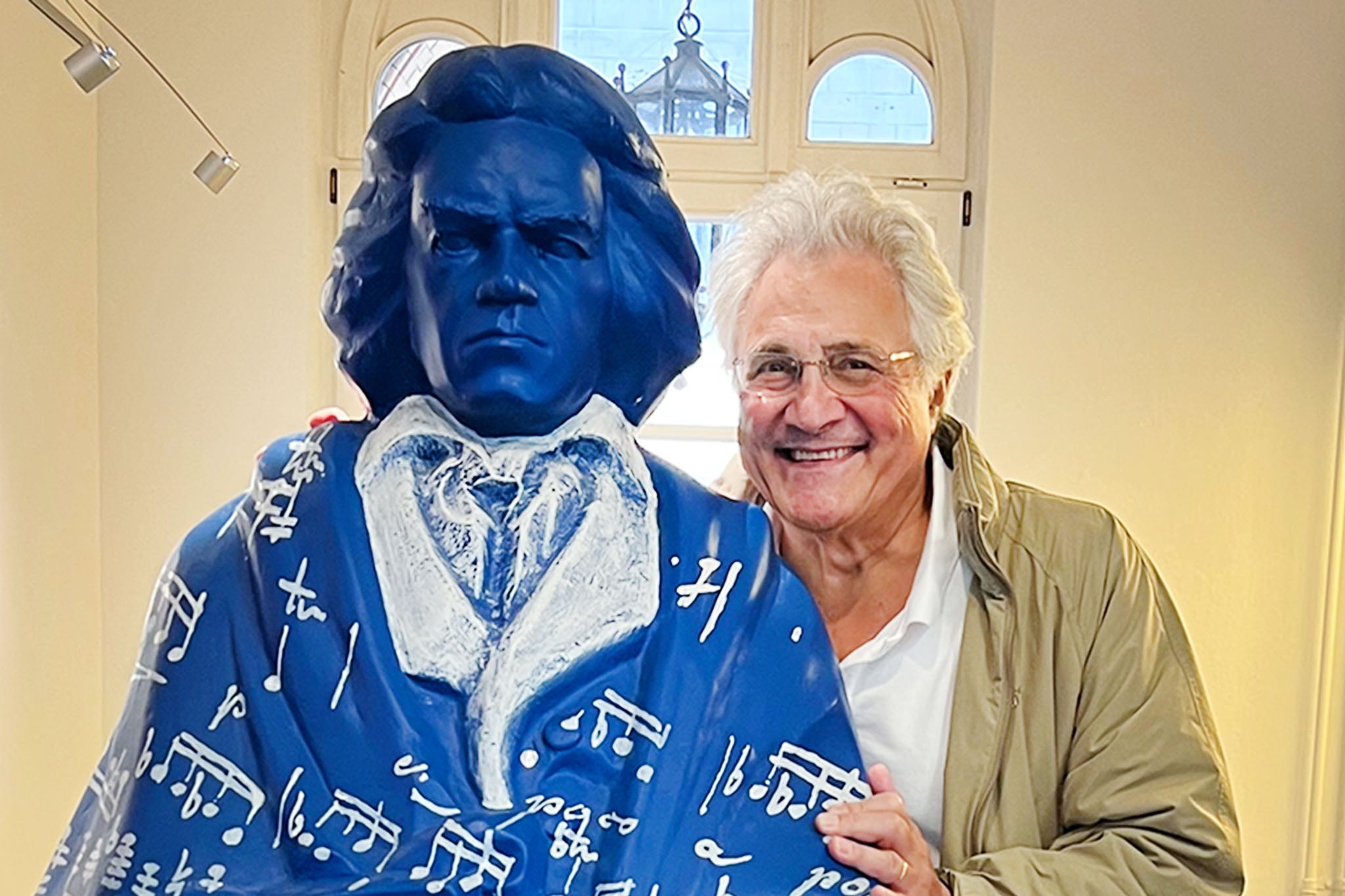
A short intended stay of maybe two or three weeks turned into six months, lasting well into autumn. Late in the stay, on 6 October, he sat down to write a letter to his two brothers, which begins as a cri de coeur, pleading with mankind to understand why he was difficult, short-tempered – it was all to do with having to cope with his loss of hearing. And then he writes the three little words, “ich bin taub” (I am deaf).
It is the first time he has written down these three words, and it is clear from his suddenly cramped writing and the erratic spacing that he had to brace himself – no doubt fortified with local red wine – to write them. And by writing them, I am convinced that he overcomes his deafness. He has accepted it, it will never be cured. “I am a deaf musician, that is what I am.”
He knew he would not let it defeat him; he would continue to compose. How did he know? Because the first substantial piece of music he composed on returning to Vienna was the Eroica. And there it all is. The problems, the deafness, his solution, and therein his message to us of future generations.
So there we were, Nula and I, in the garden of the cottage in Heiligenstadt – a half day’s carriage ride from the city for Beethoven, eight stops on the U-Bahn line 4 for us – and I was regaling her with the story of how, in the cottage where we were sitting in the garden, he wrote that letter, which towards the end becomes a will, and which was found in his effects after his death.
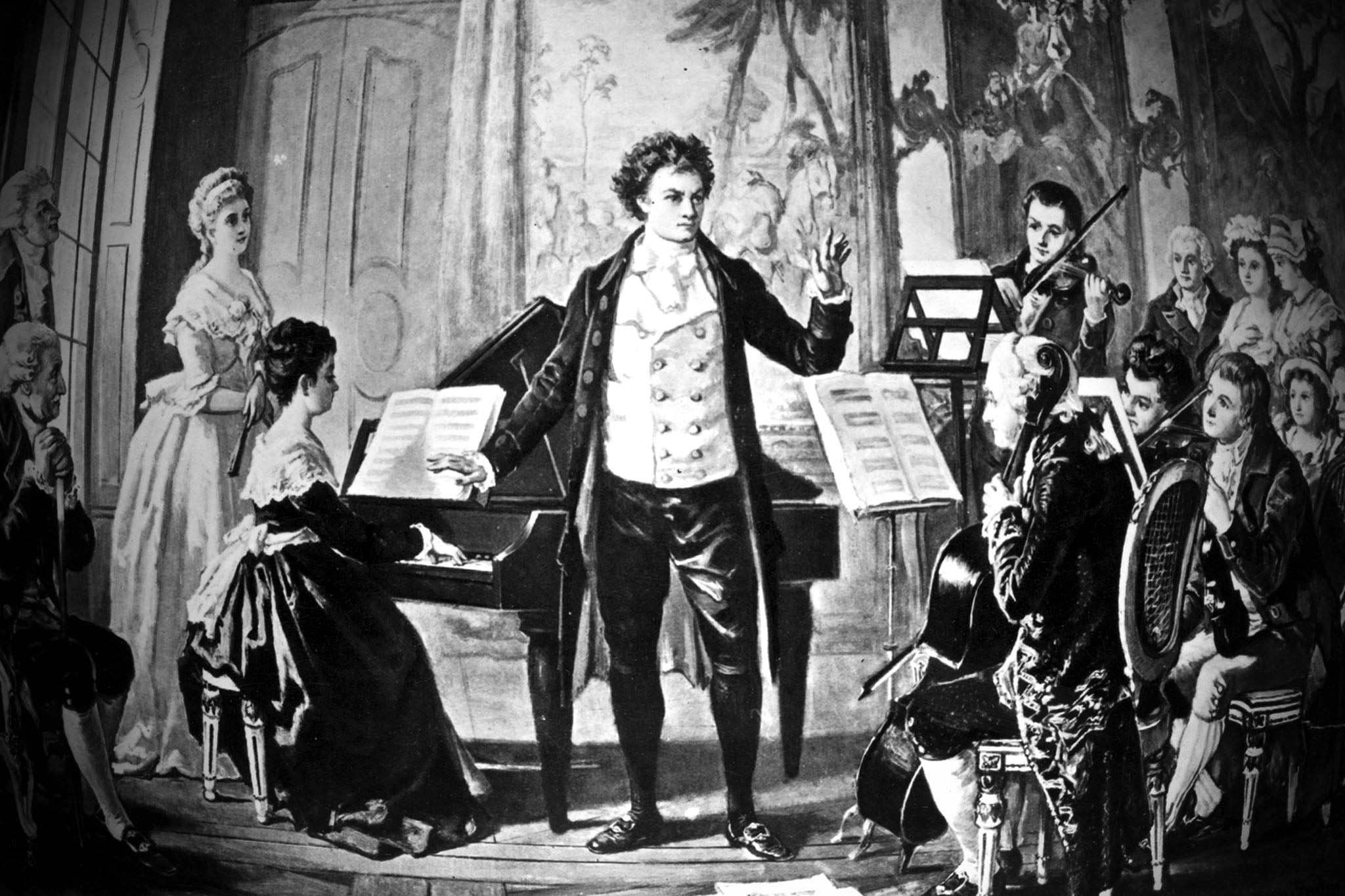
“You must write all this down,” she said. “I already have, several times,” I replied. “No, this is different,” she continued, “I want to know your story, how you got into Beethoven’s music, how it has become a lifelong passion, when you first heard his music, what effect it had on you. I want to know your story with Beethoven.”
I thought for a moment. “Well that might make 10 pages, 20 if I’m lucky,” I replied. But I started writing, and as I wrote, things started to happen. In his home town of Bonn, I found the church in which his parents were married, in which he was baptised, where he played organ at Mass at the age of 13. I enthusiastically took pictures.
Only because my loud voice disturbed an elderly man sitting in a back pew, who came over, I thought, to berate me, did I learn we were in the wrong church. The original had been destroyed by fire, he told us. “But they saved the font in which the baby Ludovicus was baptised,” he said, “it is over there.”
I can surely guarantee that of all the thousands of books that have been written about Beethoven, mine might be the only one to contain a picture of the font in which the infant Beethoven was baptised. I also look at the groundbreaking research by the University of Cambridge in collaboration with the Max Planck Institute of Leipzig, which has thrown his Dutch heritage into doubt as a result of the successful sequencing of Beethoven’s genome.

That was to be my final chapter – an up-to-date and significant way to end the book. But, as I was writing it, an email dropped into my inbox from a name I did not recognise. It resulted in a stay at a castle outside Vienna, home to a man and his wife, who is a great-great-great granddaughter of the illegitimate son of the woman to whom Beethoven dedicated “Moonlight Sonata”, and who turned down his proposal of marriage.
The couple threw a lunch for us, and invited some of their closest friends, all belonging to families Beethoven knew. I took a photograph of them on the balcony of Schloss Breiteneich. Looking at that photograph, Beethoven would exclaim, “I know their names!” It is a unique image which tells us a new story. Is my Beethoven journey at an end? Of course not. I am currently writing book nine, informally known by my publisher as “Suchet’s Ninth”!
‘In Search of Beethoven: A Personal Journey’ by John Suchet (Elliott & Thompson, £10.99) is out now
Join our commenting forum
Join thought-provoking conversations, follow other Independent readers and see their replies
Comments
Bookmark popover
Removed from bookmarks