Spacecraft that left astronauts stranded in space was one of Nasa’s worst ever failures, space agency says
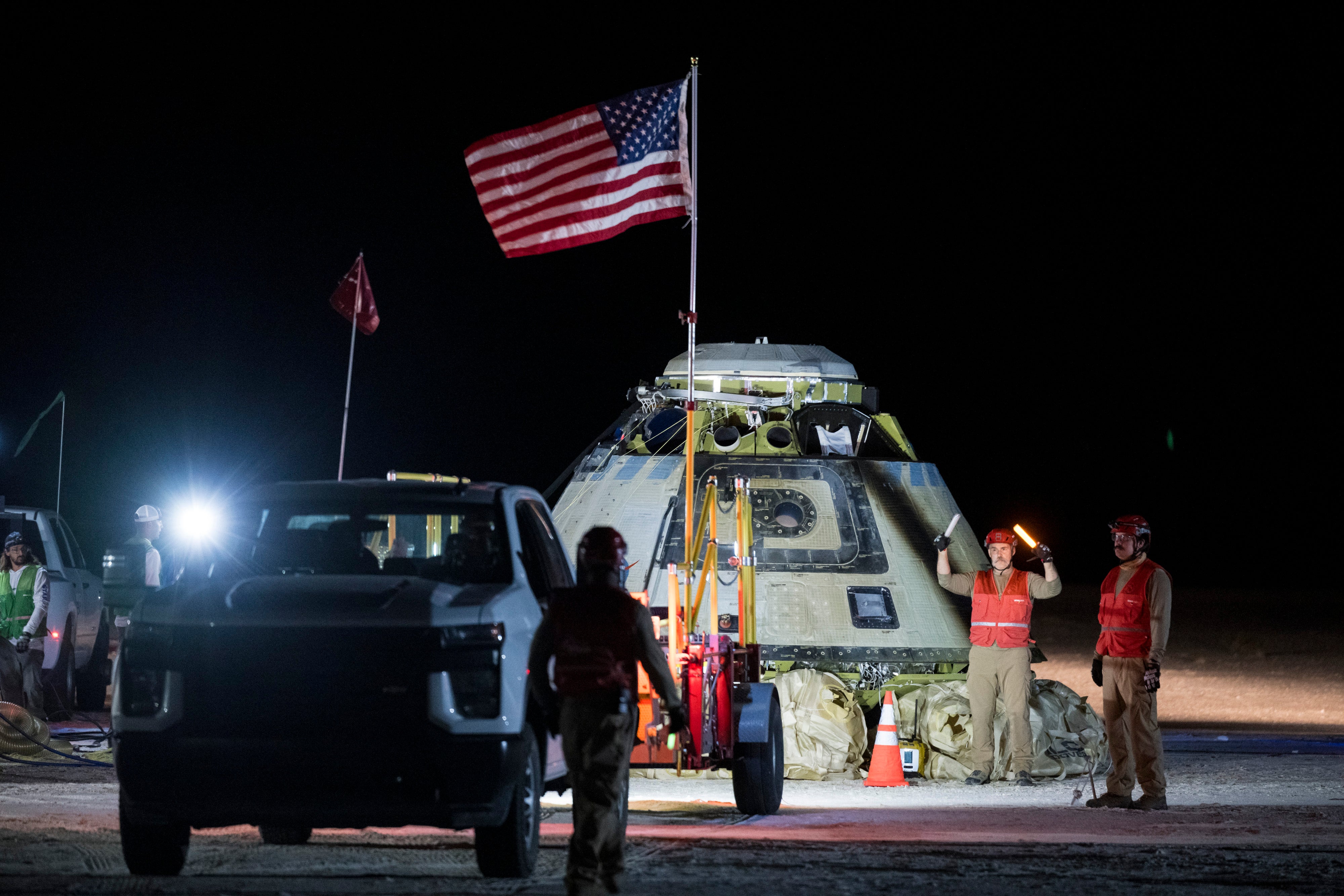
The Nasa mission that left astronauts stuck in space was one of the agency’s worst ever failures, it has said.
In 2024, Nasa astronauts Barry Wilmore and Sunny Williams conducted the first crewed test flight of Boeing’s Starliner spacecraft, which was intended as a new way to take people to the International Space Station and other destinations. But the mission went wrong almost as soon as it took off, leaving the two astronauts stuck in space for nine months.
A new Nasa report details a host of problems that led to the problems with the mission, including communication breakdowns and "unprofessional behavior" as the agency and its longtime contractor struggled to agree on how to safely return the crew to Earth.
NASA Administrator Jared Isaacman ripped into Boeing and agency leadership for their handling of the Starliner mission during a news conference timed with the release of a 300-page report detailing technical and oversight failures behind the spacecraft's first crewed mission, which concluded last year.
"Starliner has design and engineering deficiencies that must be corrected, but the most troubling failure revealed by this investigation is not hardware," Isaacman wrote in a letter to NASA employees, which he posted in full on X.
"It is decision making and leadership that, if left unchecked, could create a culture incompatible with human spaceflight," he added, echoing findings in the report's "cultural and organizational" section.
On Earth, according to the report, Boeing and Nasa officials sparred in tense meetings on how best to bring the crew home, with "unprofessional behaviour" and yelling matches that countered the agency's norms of healthy technical debate and crisis management.
The report, completed in November and citing interviews with unnamed Nasa officials, said "numerous interviewees mentioned defensive, unhealthy, contentious meetings during technical disagreements early in the mission."
"There was yelling in meetings. It was emotionally charged and unproductive," one official reported. "It was probably the ugliest environment that I’ve been in," another said.
"There wasn’t a clear path for conflict resolution between the teams. That led to a lot of frayed relationships and emotions," said another.
Boeing said in a statement that it was "grateful” to Nasa for its thorough investigation and the opportunity to contribute to it." The company, it added, has made progress on fixing Starliner's technical issues and has made organisational changes.
Wilmore and Williams, both veteran test pilots and astronauts, launched as Starliner's first test crew in June 2024. Five of the spacecraft's maneuvering thrusters failed roughly 24 hours into flight as it was approaching the ISS for an autonomous docking, prompting the crew to manually intervene. The thruster issues were among four primary technical flaws Starliner experienced during the mission that set off months of debate and ground tests as "Butch and Suni" stayed on the ISS. They returned to Earth last year on a SpaceX craft after Nasa opted to return Starliner to Earth empty.
"They have so much grace, and they're so competent, the two of them. And we failed them. The agency failed them," Nasa Associate Administrator Amit Kshatriya told reporters.
Williams, now 60, retired from NASA in December, logging 608 days in space across three missions in her 27-year Nasa career. Wilmore, now 63, retired in August after spending 25 years at the agency, clocking 464 days in space across three missions.
The report also describes a "fragile partnership dynamic" between Nasa and Boeing, in which agency officials' concerns that Boeing could drop out of Nasa’s Commercial Crew Program influenced officials' decision-making on critical mission issues.
"This reluctance to challenge Boeing's interpretations and failure to act on engineering concerns has contributed to risk acceptance and a fragile partnership dynamic."
NASA retroactively classified the Starliner mission as a "Type A" mishap, the agency's most severe category of mission failure, triggered by factors such as damage to a spacecraft exceeding $2 million or a crew member's death or permanent disability.
Additional reporting by agencies
Join our commenting forum
Join thought-provoking conversations, follow other Independent readers and see their replies
Comments
Bookmark popover
Removed from bookmarks