We were all rooting for Tyra Banks to give us some answers – but this America’s Next Top Model documentary gaslights its audience
The new Netflix documentary ‘Reality Check: America’s Next Top Model’ analyzes the toxic culture that was commonplace on the modeling contest from 2003 onwards — and still, nobody takes accountability for what happened. As Tyra Banks uses her appearance in the series to hint at a future ‘ANTM’ reboot, what value does the documentary have at all, asks Ellie Muir
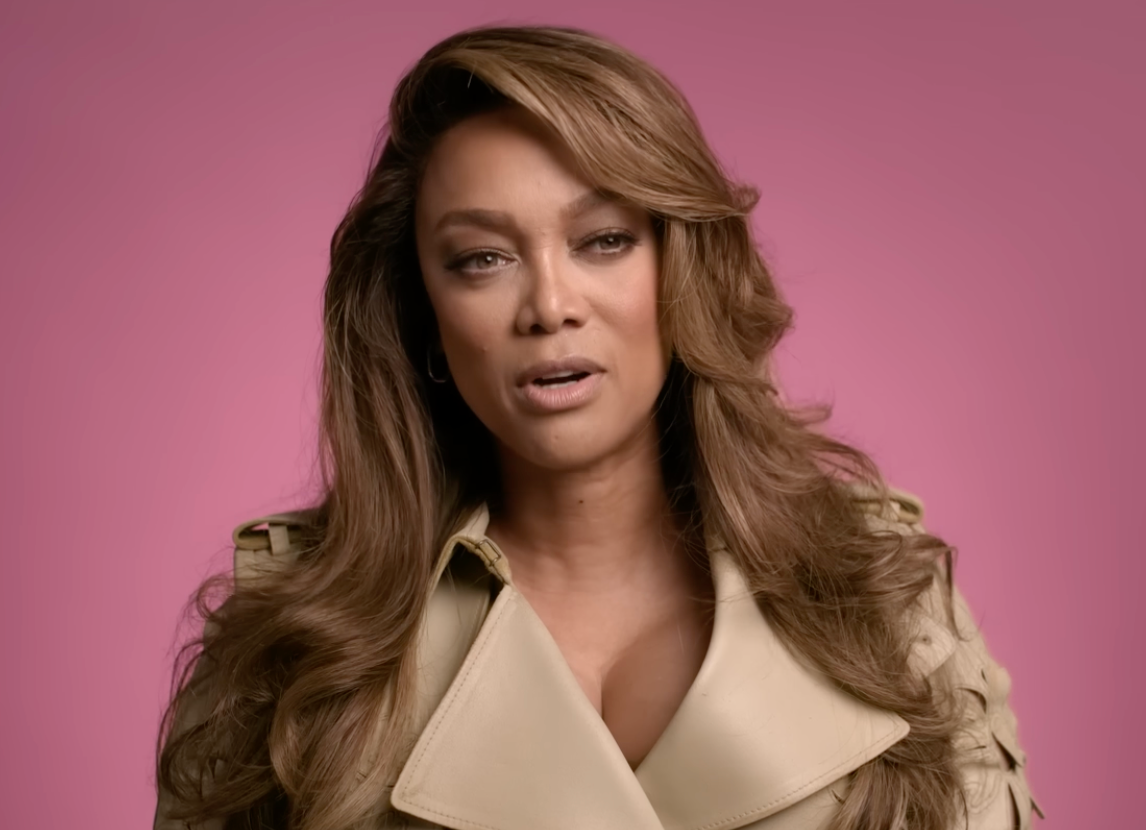
After Reality Check: America’s Next Top Model, a three-part post-mortem on the toxic culture of the reality series America's Next Top Model, you’d think that the show’s creator Tyra Banks would run for the hills at any opportunity to remake it. But no, after three hours of swerving questions on the fat shaming, racism, public humiliation, harassment and verbal abuse that was typical of the program from 2003 onwards, Banks hints that she’s bringing ANTM back to life. “You have no idea what we have planned for cycle 25,” she tells the camera with an all-knowing smile.
This is the hypocrisy of Reality Check, a documentary promised as an insider look at the now-problematic reality TV quest to find the next supermodel. Instead, watching this documentary feels like you're doomscrolling through rage-bait in real-time. Viewers watch as the original ANTM team — comprised of Banks, network producer Ken Mok, as well as judges Jay Manuel, Miss Jay Alexander and Nigel Barker — swerve uncomfortable questions about what happened on the show in the early aughts by reciting media-trained one-liners and eye-rolls. “It was a different time,” they insist ad nauseam.
Yes, this series is a case study in the messy ethics of an unprecedented time in early 2000s reality TV, but that shouldn't be an excuse. Banks, it must be said, comes off horribly in this documentary. She is quick to take credit for masterminding ANTM and changing representation in the modelling industry (for which she does deserve kudos), but she rarely takes accountability for any of the show’s failures despite having profited from the series in a big way. Forbes estimated in 2009 that Banks earned $30 million from ANTM in that calendar year alone, while former contestant Sarah Hartshorne claimed that she and fellow contestants were paid $38 per day when she participated in 2007. Banks’ creative input in the show is as clear as day, but in this documentary, she shrugs off her “executive producer” title as if she was merely on-screen talent. At one point, she even projects blame for ANTM’s questionable ethics onto viewers: “You guys were demanding it…The audience wanted more and more,” she said before claiming “production wasn’t my territory” whenever quizzed on her involvement in the show’s more damning moments.
And, to be clear, there were a lot of those. During the pandemic, new and returning viewers binge-watched ANTM from the start, aghast at the exploitative ethics of 2000s reality TV. Millennial fans came forward on social media, admitting that watching the show 20 years ago had made them internalize the show’s problematic body image standards (they invited “plus size” AKA size six and up models on the show, but only provided clothes that were too small). Then there were the show’s controversial photo shoots, including two instances where models were asked to dress as a different ethnicity, posing with toddlers who matched the assigned race. Cycle four contestant Keenyah Hill spoke about the fat-shaming she faced from the judges, when she was assigned “gluttony” for a “seven deadly sins”-themed photo shoot, which was backed up by a montage of her eating a bagel. On a safari-themed shoot, she was given the elephant role.
For another shoot, cycle eight contestant Dionne Walters was asked to pose with a bullet wound in her head; the same place her mother had been shot by an ex and left paralyzed. When addressed in the documentary, Mok admitted that the particular shoot was “a mistake” and “glorified violence.”
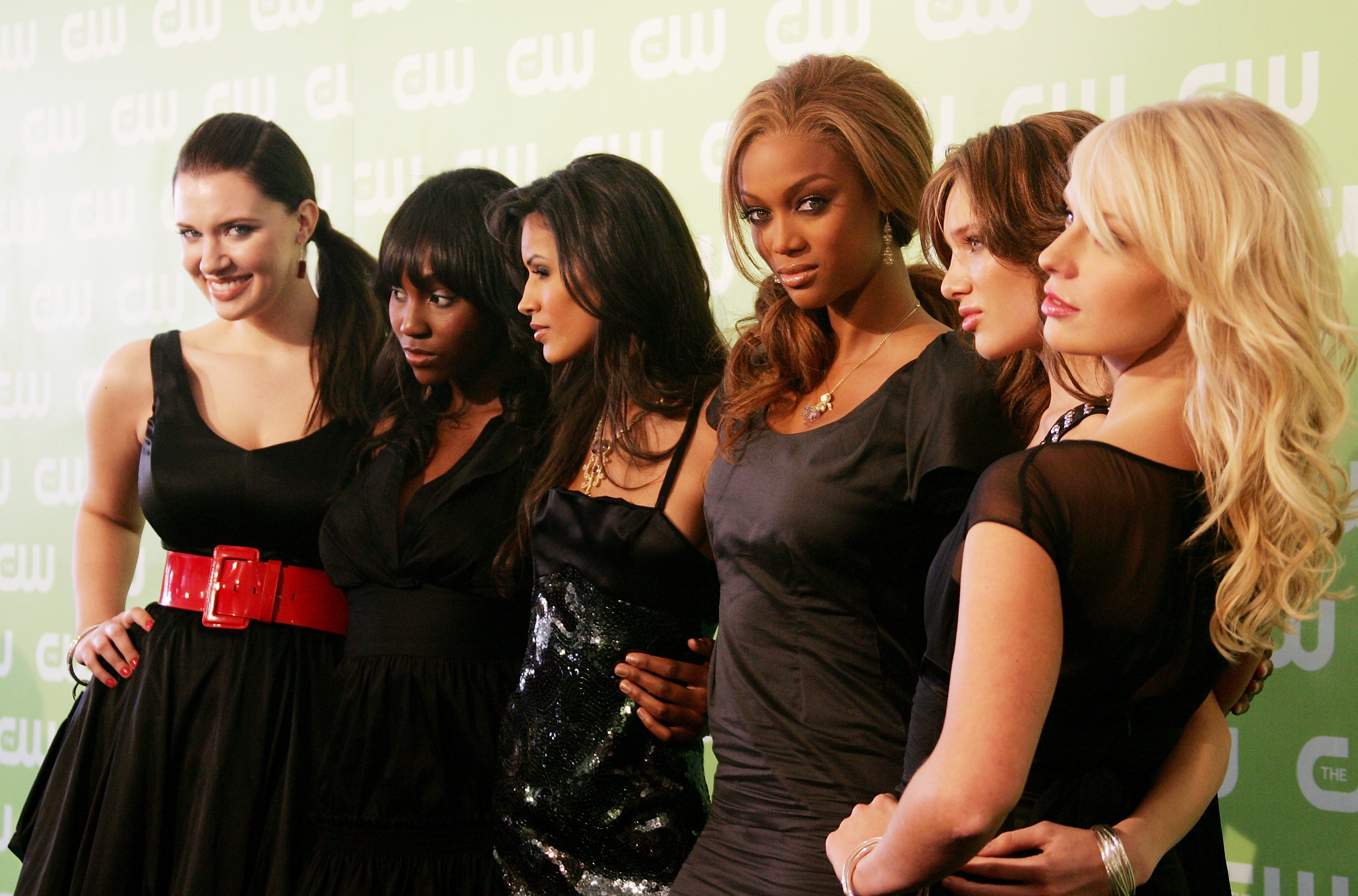
During the makeover stage, models underwent irreversible procedures. Two models, Dani Evans (cycle-six winner) and Joanie Dodds (also cycle six), admitted they were pressured into having their teeth permanently altered, for which Banks has since apologized. It gets worse when former contestants and winners admit that — after going through all of the above — they were effectively blacklisted from the real-life modeling industry when they left the show because of the reputation ANTM carried among agents and brands.
“Nobody wanted to book me for shows because I was a reality star,” said Evans. She reflected on a conversation she had with Banks years later, who apparently admitted she was fully aware that ANTM contestants had no chance in the actual fashion industry, but she did nothing about it. “And so to have her, a Black woman, say to me, I knew you were struggling and I did nothing about it…Don’t see me in my suffering and just walked past me,” Evans continued. “That’s so f***ed up.”
The most disturbing admission comes from cycle two contestant Shandi Sullivan when she reflects on the models’ trip to Milan. Sullivan, who was depicted as the bright-eyed Walgreens employee with a promising future, got drunk on two bottles of wine and was taken advantage of by a man who she had sex with when the producers invited a group of local moped riders to the models’ accommodation for a party. In Reality Check, neither Sullivan nor the documentary explicitly refers to this as sexual assault, but the original ANTM footage suggests she was too drunk to consent. Through tears, Sullivan said in the documentary that she was “blacked out for a lot of it…I just knew sex was happening, and then I passed out.” Not only did production fail to intervene, they filmed the entire thing. When the episode aired, Sullivan was depicted as the Christian girl-gone-rogue, and production would only give her a phone to call her boyfriend on the condition that it was filmed and recorded. Sullivan says her distressed demands to leave the show were denied. The title of that episode? “The Girl Who Cheated."
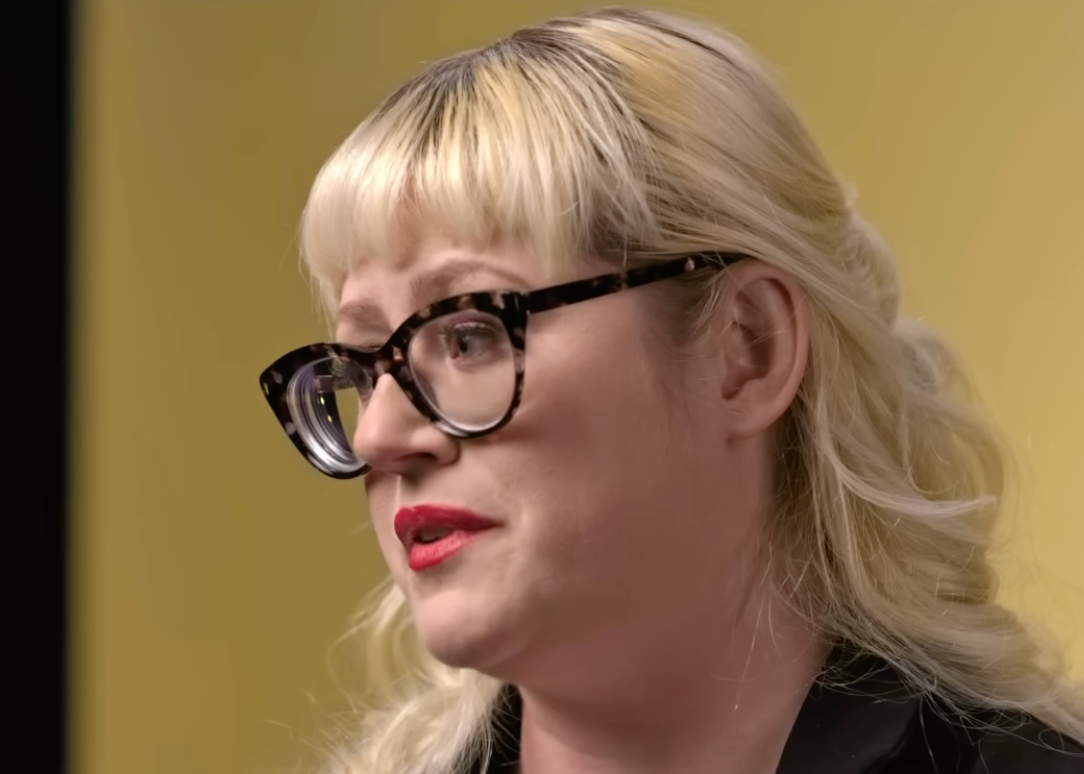
When asked about what happened to Sullivan, Banks struggled to remember who she was, despite having interviewed the contestant about the Milan incident several times on her eponymous talk series, The Tyra Banks Show. “It’s a little difficult for me to talk about production, because that’s not my territory,” Banks said plainly.
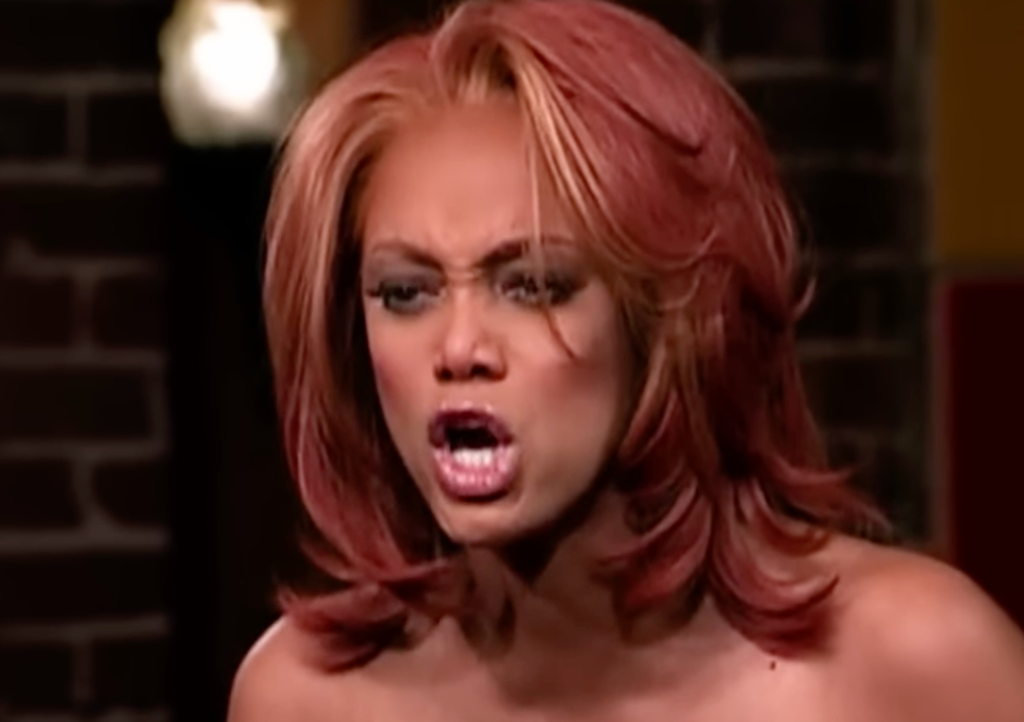
In fact, when Banks is asked about the toughest moment on ANTM, she lands not on any of the aforementioned missteps the show made, but on her infamous tirade (“We were all rooting for you!”) at outgoing contestant Tiffany Richardson — which has since become one of the most famous memes in reality TV history. “I went too far. I lost it," Banks reflected. “It was probably bigger than her — it was family, friends, society. Black girls, all the challenges that we have, so many people saying that we're not good enough. I think all of that was in that moment.” It is an honest reflection, but leaves viewers wondering if Banks has any comprehension of the toll the show took on the models.
It is, of course, not productive to judge a 2003 show by 2026 standards, and the privilege of hindsight is obviously at play here. Many of the former contestants who appeared on Reality Check admitted that they had not realized the seriousness of what happened to them on ANTM until recently. After all, the words “duty of care,” “boundaries” and "gaslighting" were not in the mental health lexicon back then. But there were some models who called out the behavior, and were punished and gaslit for it. In cycle four, Hill spoke out (on camera) to the crew and judges when she faced unwanted advances from a male model on a photo shoot. But she was told by Banks to use her “feminine wiles” to combat him, and simply put up with it.
The word gaslight, an everyday term for emotional manipulation, only came to be widely recognized in 2016; later being named Merriam-Webster's Word of the Year in 2022. And it is the perfect word to describe Banks’ PR defensive in Reality Check. Viewers, too, can’t help but feel gaslit by the very premise of this show. Just when you feel pulled into a storyline and start questioning what you're watching, those thoughts are shut down with the “it was a different time” argument, again and again. Reality Check, we were all rooting for you. But there are too many missed opportunities for sincere accountability from those behind the show — most importantly from Banks.
And if Reality Check turns out to be a thinly veiled advertorial for an ANTM reboot, then maybe we were all played as fools.
Join our commenting forum
Join thought-provoking conversations, follow other Independent readers and see their replies
Comments
Bookmark popover
Removed from bookmarks