The Independent's journalism is supported by our readers. When you purchase through links on our site, we may earn commission. Why trust us?
Samsung’s new Galaxy Z Trifold keeps selling out — but is it worth buying?
I was one of the first to test out the new Samsung Galaxy Z Trifold
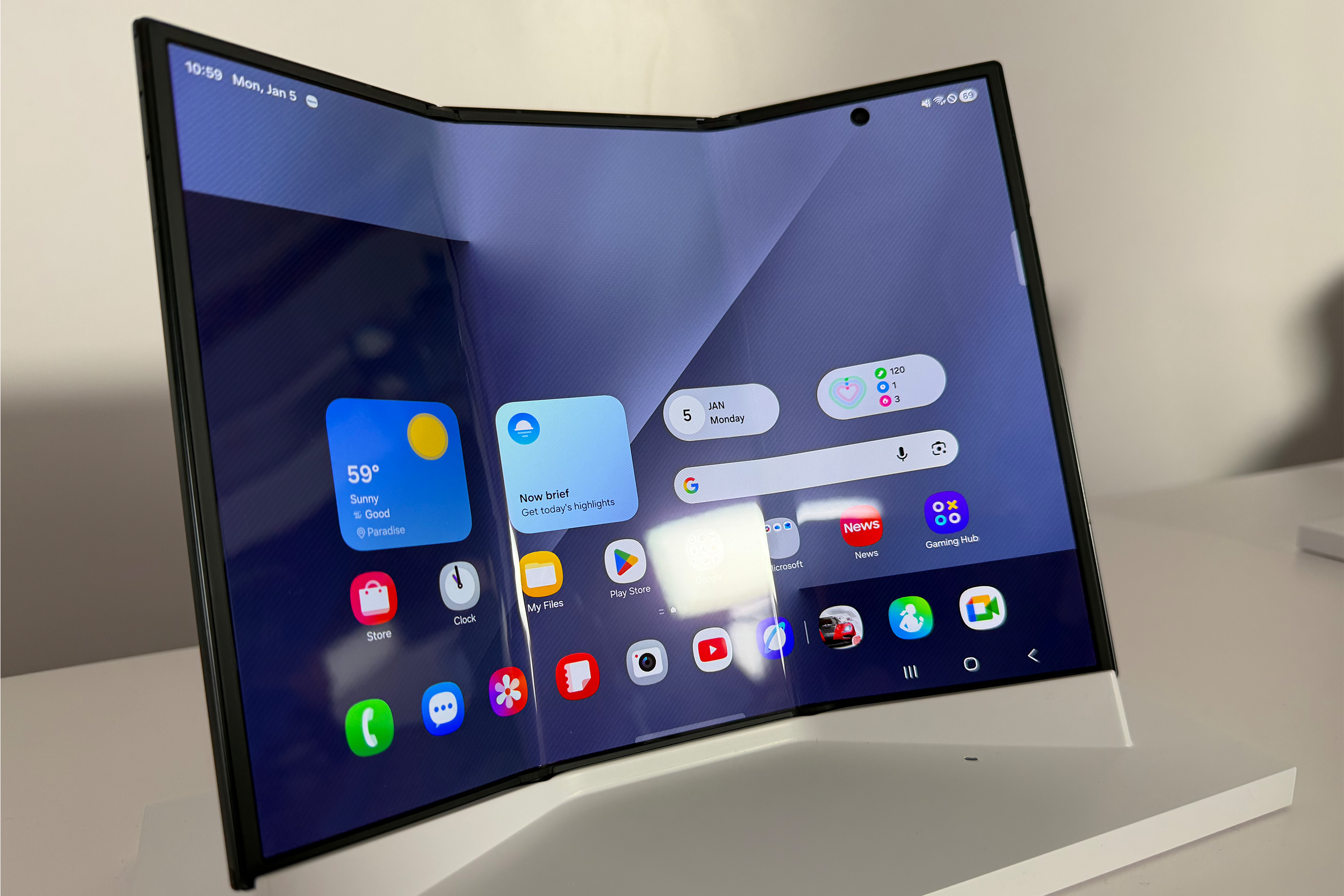
Samsung’s latest phone is one of the first folding phones to have a display that folds not once but twice. But what’s it like in the flesh?
One of the main pioneers of folding phones, Samsung’s Z Fold series is now up to its seventh generation. Its latest model, the Galaxy Z Fold 7, folds out from regular phone size to a smallish tablet.
If you’ve hesitated about folding phones because the open display isn’t big enough, or you feel the shape it achieves when unfolded doesn’t work as well as a traditional tablet, then maybe the Z TriFold is the answer.
Revealed in December 2025, the Galaxy Z TriFold has since gone on sale in Korea and in the U.S. Both countries sold out quickly, though it’s thought that the number released so far is small. It’s being restocked in the U.S. on February 20. Ahead of then, read my initial thoughts on the new model.
Samsung Galaxy Z TriFold
.png?quality=75&width=703&crop=3%3A2%2Csmart&trim=0%2C0%2C0%2C0&auto=webp)
- Display when closed 6.5-inch FHD+ AMOLED
- Display when open 10-inch QXGA AMOLED
- Dimensions when closed 159.2mm x 75mm x 12.9mm
- Dimensions when open 159.2mm x 214.1mm x 3.9mm (thinnest screen measurement)
- Refresh rate 1-120Hz
- Peak brightness 1600nits
- Rear cameras 200MP, 12MP, 10MP
- Cover screen camera 10MP
- RAM 16GB
- Storage 512GB, 1TB
- Weight 309g
- Why we love it
- Gorgeous unfolded display
- Super thin when open
- Impressive cameras
- Take note
- Chunky in the pocket
- Very expensive
Samsung Galaxy Z TriFold design and size
The Samsung Galaxy Z TriFold isn’t like regular folding phones: the screen folds in two places, not one (nor three, as the name suggests). When folded, it’s a regular-shaped smartphone (if rather chunky), but when you unfold it fully, it’s the same size and shape as a tablet with a rough 4:3 ratio. As a point of comparison, the 10-inch unfolded display is larger than the original iPad and only a little smaller than the regular iPad now (which is 11 inches).
.png?quality=75&width=608&auto=webp 608w)
The TriFold is very slim. The individual panels have different thicknesses — the thinnest is 3.9mm, the thickest 4.2mm, though you don’t notice that in use. It feels strong, but not as sturdy as a conventional tablet, not least because regular tablets are thicker. (Apple’s thinnest, the 13-inch iPad Pro, is 5.1mm thick, for instance.)
The specifications give you an idea of its size and design, but somehow don’t prepare you for seeing the Z TriFold in the flesh. First, the dimensions when it’s folded take a little getting used to, because it’s a much thicker device than a regular bar-shaped phone, or even a conventional folding phone. And then there’s the camera panel, which protrudes further — something you’d notice if the phone is in your jeans pocket.
Once you open the phone fully, you suddenly see what it’s all about. It may have been in your pocket a moment ago, but now there’s a full-sized tablet in front of you. The display is impressive, and when there’s content on the screen, the creases between the two folds are barely visible. (They are noticeable when the device is in standby.) Watching videos or movies is a much more appealing option with the Z TriFold. Where a regular folding phone with its squarish aspect ratio means that half the screen is black borders, here, there’s much more movie.
Something that also takes a moment to get familiar with is the nature of the fold. Although it has a Z in its name, it doesn’t fold in a Z shape, but rather a U-shaped motion with the two sides folding on top of the central panel.
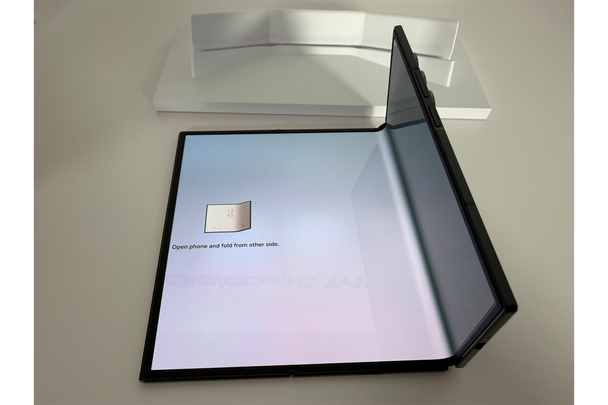
You can only close the phone one way — if you try to go the wrong way, a vibrating alarm sounds and reminds you to “open phone and fold from other side” with a picture of what you’re doing wrong. I didn’t have long with the TriFold, but I’m sure this becomes second nature in time.
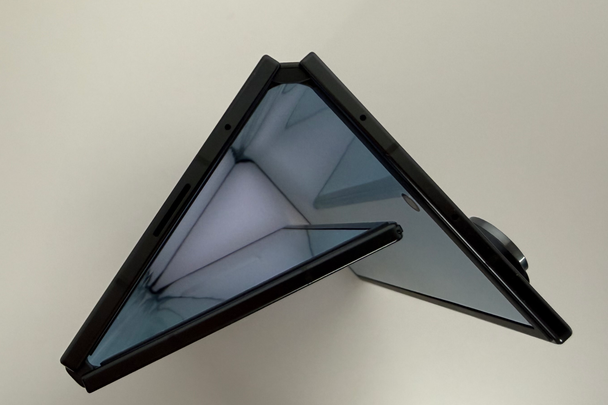
Overall, the design of the Samsung Galaxy Z TriFold is intriguing. The three external panels consist of the front screen, the rear panel for cameras, and the third panel, which is completely blank. No matter how many times I opened and closed the TriFold, this empty panel took me by surprise. Still, that’s also because you see it so rarely: the phone is usually either completely open or fully closed.
Samsung Galaxy Z TriFold cameras
Samsung has put three cameras on the outside of the Z TriFold, whereas many folding phones still have only two. Additionally, there’s a single camera on the cover display and a fifth one peeping out of the display you look at when it’s unfolded. Having plenty of cameras is a good thing, especially since this is an expensive phone. But when the phone is lying flat, the cameras stick out. And when typing a message with the phone on the table, for example, it rattled back and forth.
Early verdict on the Samsung Galaxy Z TriFold
There’s no doubt that the Samsung Galaxy Z TriFold is a triumph of engineering. When folded, every part sits exactly in place, subtle markings lined up perfectly. The hinges are smooth and move with just the right amount of fluidity, so it doesn’t snap open unexpectedly or put up a fight when you’re closing it.
Because of the size of the unfolded screen and its rectangular shape, it makes a hundred times more sense than a regular folding phone, better for displaying multiple apps, playing games, and watching videos.
However, at $2,899, the high price will prove too much for some.
Bookmark popover
Removed from bookmarks