Decades after WWII, ammo is still poisoning the seabed
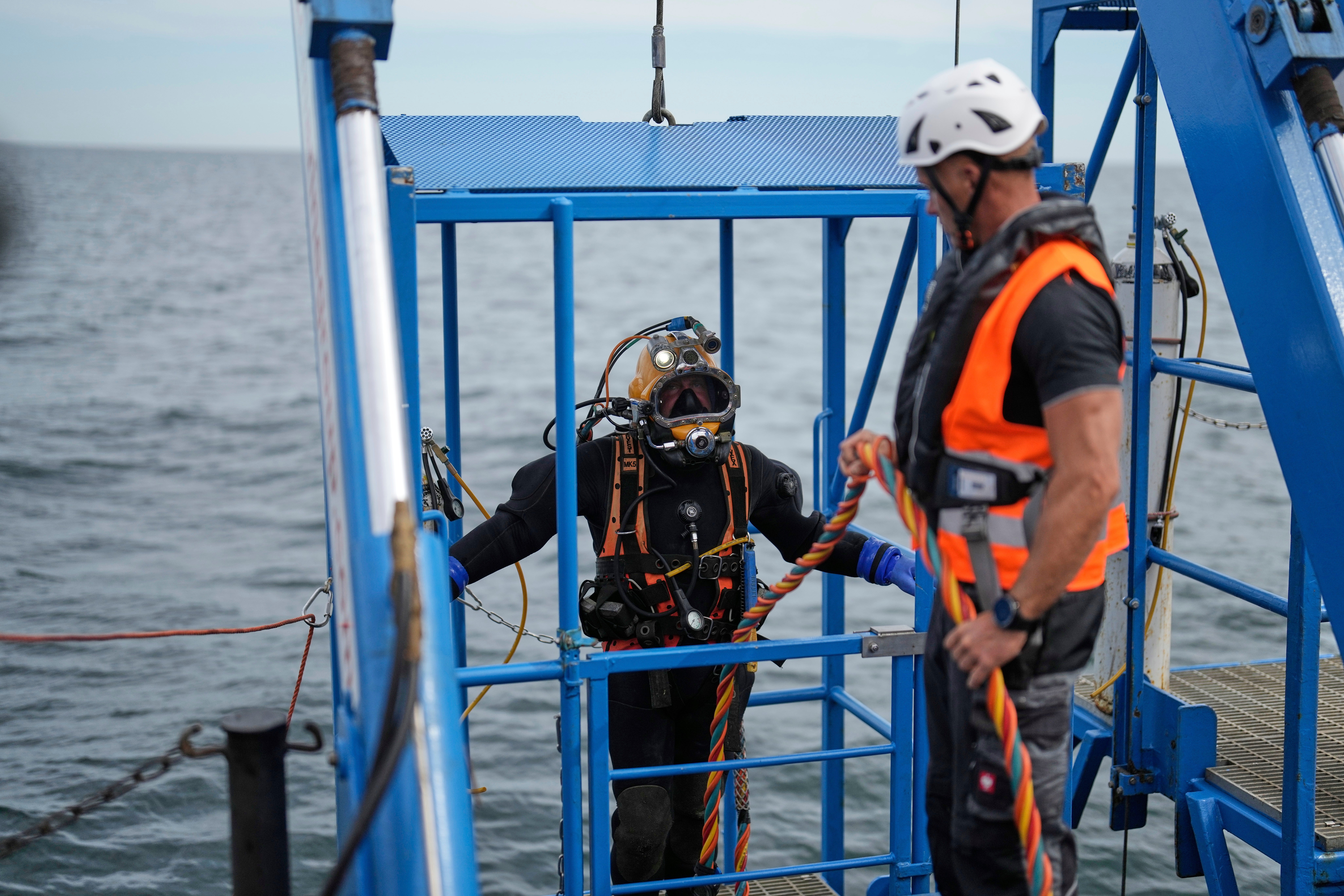
A diver is lowered into the water during a press tour to show the recovering of ammunition from World War II in the Baltic Sea near Boltenhagen, Germany (Copyright 2025 The Associated Press. All rights reserved)
European nations are actively cleaning up an estimated 1.6 million tonnes of World War II ammunition from the Baltic and North Seas, a legacy of the conflict where ordnance was dumped after the war.
The decaying ammunition poses a significant and growing danger, as rusting casings release toxic compounds like TNT into the marine ecosystem, contaminating water and accumulating in marine life.
The German government has allocated 100 million euros to fund research and pilot projects, such as the 'Baltic Lift' platform, to develop safe methods for recovering and disposing of the hazardous material.
Divers, like Dirk Schoenen, are meticulously working to extract ammunition, which is then stored underwater before being taken ashore for specialised disposal, highlighting the extreme caution required due to the unstable nature of the old ordnance.
Experts emphasise the urgent need for clearance, particularly in the Baltic Sea due to its limited water circulation, and note that this issue of submerged wartime ammunition is a global problem affecting many other regions worldwide.