How blood thirsty Dracula transformed from King of the Undead to misunderstood lover
A new film adaptation has received particular attention for its focus on personal passion


The Lord of Vampires. The King of the Undead. The Ultimate Lover. All refer to the immortal Count Dracula, who originally appeared in Bram Stoker’s 1897 novel.
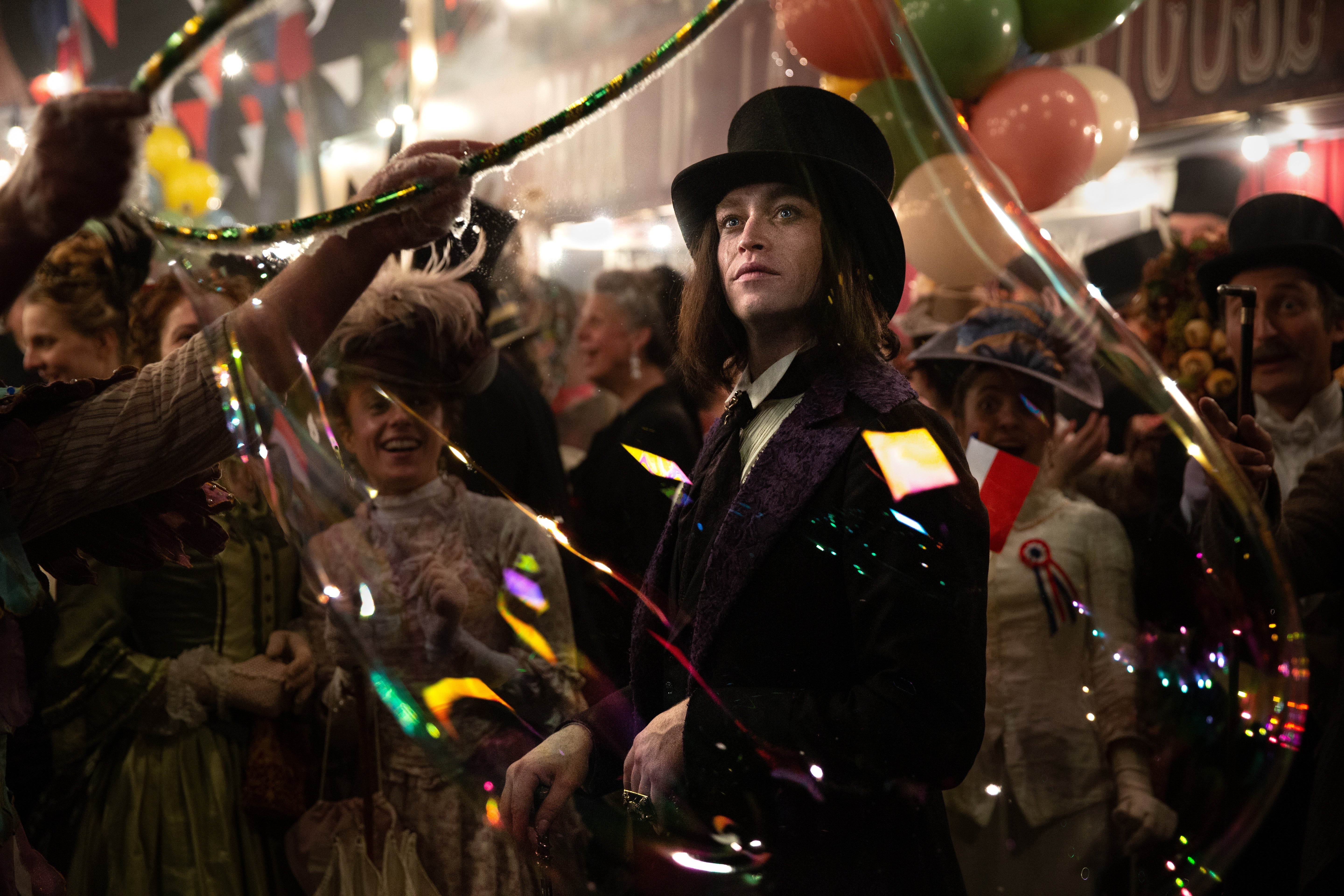
Yet the character’s fame has sprung more from his 200-plus cinematic resurrections, beginning with Dracula’s Death in 1921 and, most recently, in Luc Besson’s Dracula, which premiered in the U.S. in February 2026.
Besson’s rendition has received particular attention for its focus on personal passion. Originally titled Dracula: A Love Tale, the film features a protagonist who is not simply a monster, but a lover.
The New York Times called the movie “extravagantly silly” and described actor Caleb Landry Jones’ performance of the classic monster as “deliciously operatic: less villain, more virtuoso in love.”
Meanwhile, in London, Dracula as lover also features as a theme in Cynthia Erivo’s new West End production, in which she plays the Count and 22 other characters.
A smaller, recent production out of Washington, D.C., titled Dracula: A Comedy of Terrors presents the Count similarly, though with a hilariously deviant LGBTQ+ bite.
In other words, Dracula has come a long way from his days as a lecherous, old creep, a shift that can be attributed, in part, to evolving attitudes on love, gender and sexuality.
‘Even his breath was rank’
When Stoker first published Dracula, the character appeared at the end of a long line of literary vampires, from Lord Ruthven in John Polidori’s The Vampyre (1819) to Sir Francis Varney in Varney the Vampire (1845-1847).
These vampires were all decrepit, revolting and predatory old men, and Stoker’s Count Dracula was no different.
In the novel, one character notes Dracula’s “course” hands, the “extraordinary pallor” of his skin and his “extremely pointed” ears; atop his “lofty domed forehead,” his hair grew “scantily” upon his head. Even his “breath was rank.”
Another character describes Dracula as possessing “not a good face,” adding that it was “hard, and cruel.”
The first surviving feature-length film adaptation of Dracula was the 1922 German film Nosferatu: A Symphony of Horror, which cribs the plot and characters from Stoker’s novel. In it, Count Orlok – essentially a bootleg version of Dracula – looks ratlike, emaciated and pallid.
Seduction game
Little about Stoker’s Dracula or Count Orlok screamed “lover,” though there’s arguably an implicit sexuality in the way he attacks and stalks his victims.
Instead, Dracula gained his “lover” label from later appearances on screen.
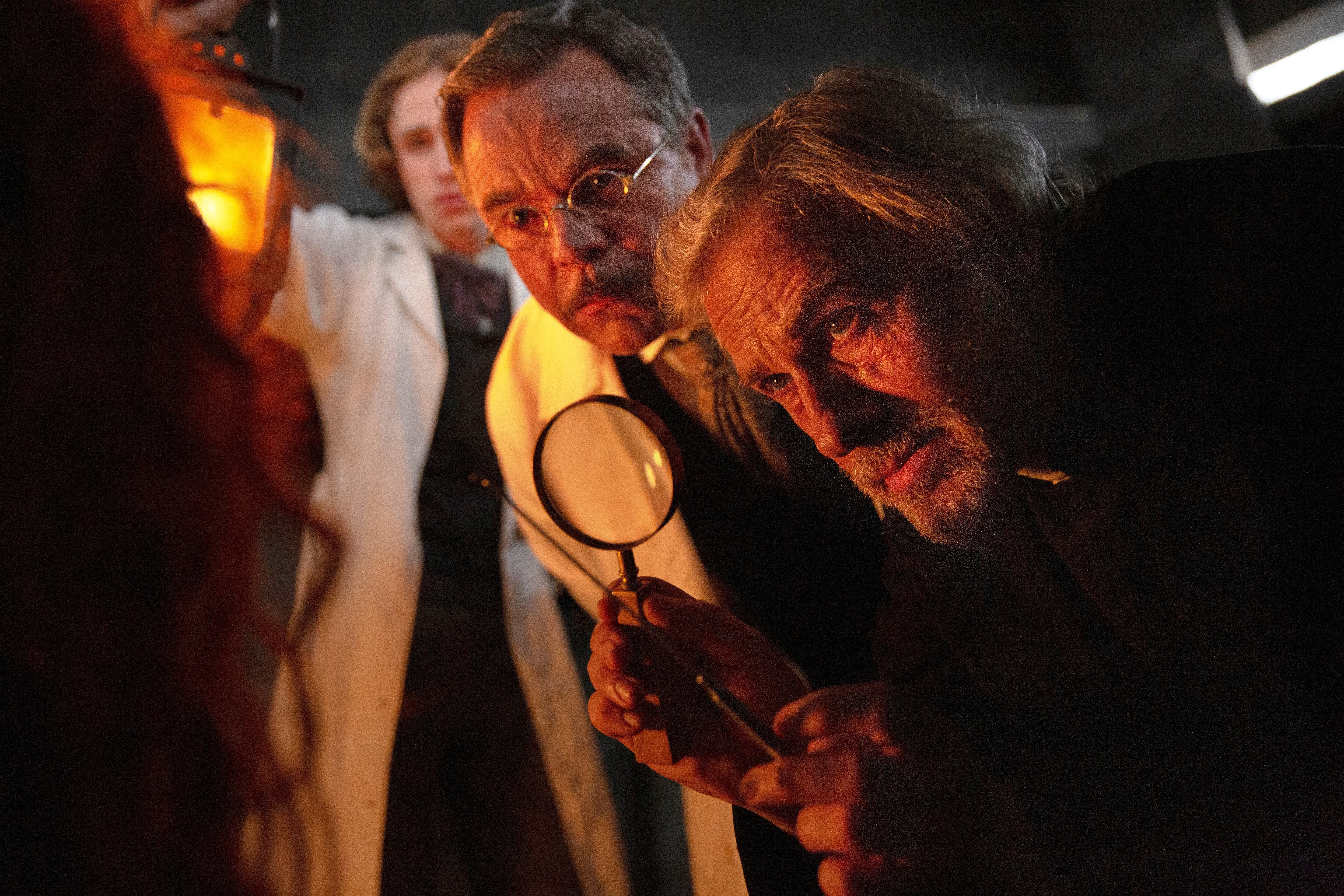
The earliest example appears in the 1944 film House of Frankenstein, where Rita (Anne Gwynne) is initially concerned by Dracula’s presence. Later, however, she finds herself “no longer afraid” after he places a ring onto her index finger, which magically fits to her precise shape.
At the end of this scene, as she longingly looks into his eyes, he announces he will come for her the next day, as if it were all a budding tryst.
The evolution of Dracula’s character mirrored changes in more general perceptions of gender, sexuality and violence that occurred after World War II, when popular culture started to chip away at the centrality of the nuclear family. As books, films and TV shows explored themes like lust, infidelity, same-sex relationships and divorce, images of vampires became more complex.
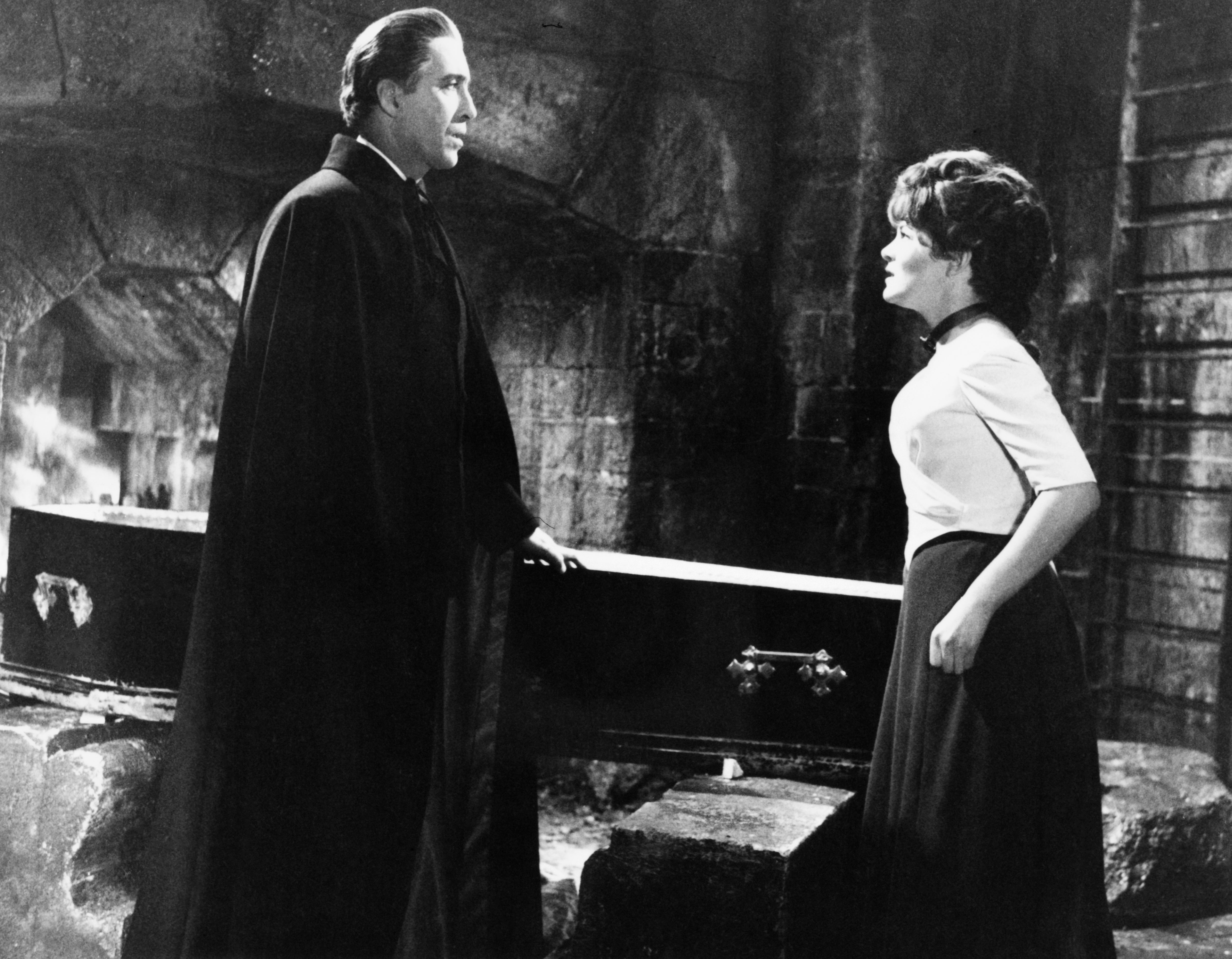
In the 1958 film Dracula, for example – titled Horror of Dracula in the U.S. – Dracula (Christopher Lee) is a predator who breaks into the homes of married women.
Yet there’s also a hint of romance. In one particular scene, he assaults Mina Holmwood (Melissa Stribling). But Mina appears to eventually give in, and they share a brief, passionate kiss. The British Board of Film Classification even censored the scene, seeing it as a step too far in a film already replete with sexual overtones.
Director Terence Fisher later recalled telling Stribling to depict her character as though she “had one whale of a sexual night, the one of your whole sexual experience. Give me that in your face!”
Lover or monster?
By the 1970s, sexuality became even more of a pronounced theme in vampire-related media, mirroring broader cultural changes in views of human sexuality.
Comic books such as “Vampirella” presented the vampire as a hypersexualized, feminine, erotic symbol of power, while films such as The Vampire Lovers explored themes like lesbianism, though not in a way that was entirely explicit.
In the film Count Dracula’s Great Love (1973), Dracula falls head over heels for a young girl named Karen, who ends up rejecting his advances. Near the end of the film, the lovesick vampire bemoans, “For the first time, love brings a finish to the life of Dracula,” before driving a stake into his heart with his own hands.
Shortly thereafter, a made-for-TV Dracula features Dracula’s search for his dead wife.
The “search for a dead lover” would become a central theme in future films. For example, in Francis Ford Coppola’s Bram Stoker’s Dracula (1992), viewers learn that Dracula leaves Transylvania for England to pursue a reincarnation of his dead wife.
This yearning was a borrowed concept. In the Gothic soap opera Dark Shadows (1966-1971), the character Barnabas Collins (Jonathan Frid) tries to replicate his romance with his long-dead lover, Josette, by attempting to supernaturally control the living body of a girl named Maggie Evans (Kathryn Leigh Scott) so that she mimics Josette.
The concept of a vampire pining for a lost love – especially one from a lost era – marked a significant evolution in vampire media.
In the 1970s comic book series The Tomb of Dracula, the Count has a human wife named Domini; through magical means, he’s even able to conceive a child with her. Thanks to his romance, he can now “understand things such as peace and rest and love.”
Despite Dracula-as-lover now being such a well-worn trope, the ever-adaptable Count is also ready for his traditional scare duties, most recently in Robert Eggers’ Nosferatu (2024).
Whether he’s a lover, a monster or both, Dracula represents the idea of the vampire as a mirror of human experience. Romance can sometimes teeter between love and pain. Passion can sometimes be scary. So when you next see him on stage or screen, don’t be surprised if his fervent love also comes with a sharp bite.
Join our commenting forum
Join thought-provoking conversations, follow other Independent readers and see their replies
Comments
Bookmark popover
Removed from bookmarks